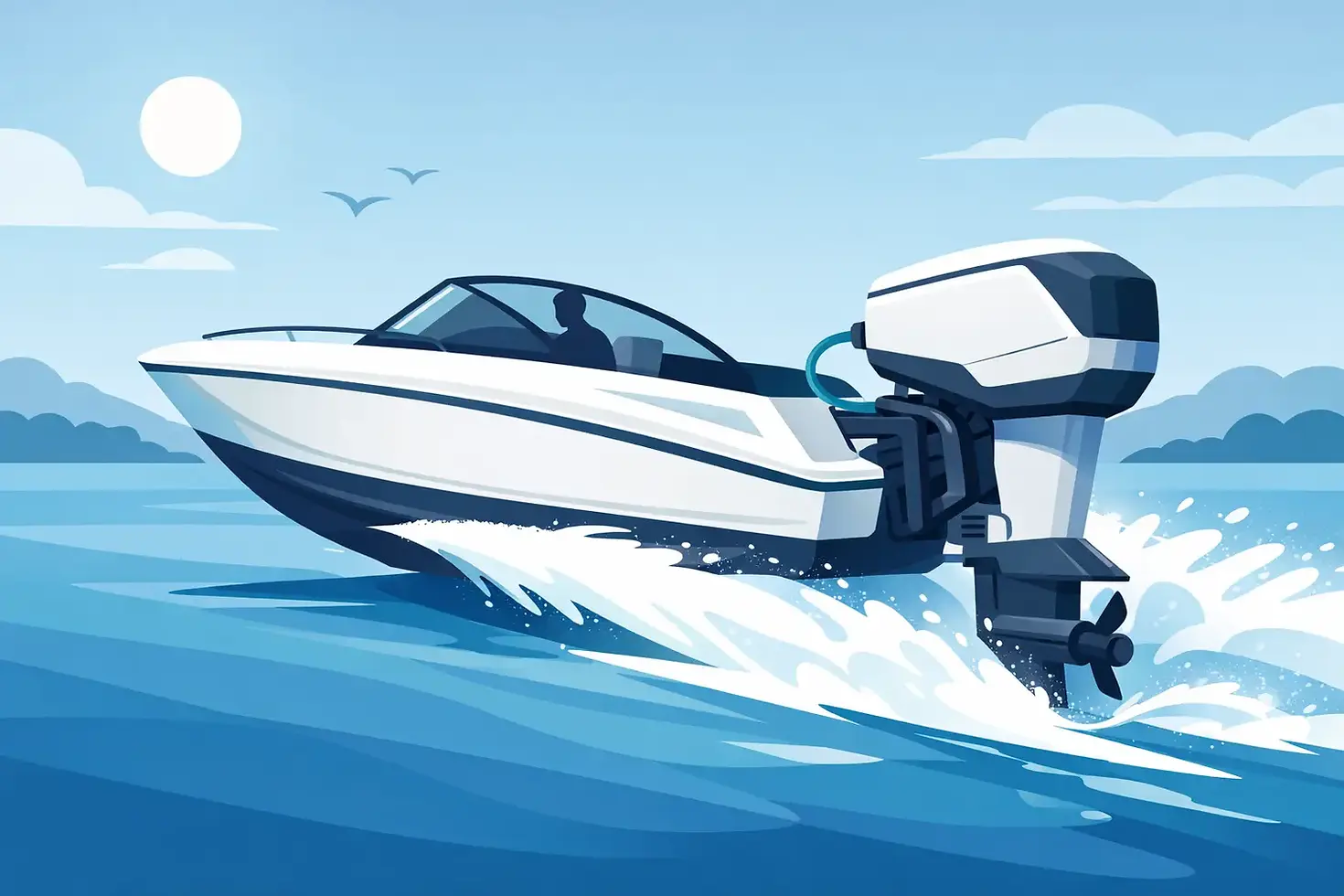
Quiet Electric Outboard Motor That Can Plane
The first thing most boaters notice about a quiet electric outboard motor is the sound - or the lack of it. The second thing they notice is more important: can it actually move the boat the way a real outboard should? That is where the conversation changes. Quiet is easy to market. Usable power is harder to deliver.
For years, electric marine propulsion got boxed into a narrow lane. Fine for trolling. Fine for short, slow runs. Fine if your expectations were low. That is not what performance-minded boat owners are shopping for now. They want clean propulsion, less maintenance, and less noise, but they still expect acceleration, control, and enough thrust to put a hull on plane.
What a quiet electric outboard motor should actually deliver
A quiet electric outboard motor is not impressive just because it runs silently at idle. Gas outboards are loud enough that almost anything electric feels refined by comparison. The real test is what happens when you ask for serious output.
Does it launch hard enough to get a loaded skiff moving? Does it hold speed in current or chop? Does it stay predictable when you trim up and push into the upper end of the power band? Those are the questions that separate a novelty from a real propulsion system.
This matters because many buyers are not replacing a trolling motor. They are replacing an outboard. That means the benchmark is not just quiet operation. The benchmark is whether the electric system can do the same core jobs without the noise, fuel, and service burden of gas.
Quiet is a benefit. Power is the decision.
Nobody complains about less engine noise. You hear your passengers. You hear the water. You hear what is happening around the boat. For anglers, that can mean a less intrusive approach in shallow water. For families, it makes the ride feel cleaner and less fatiguing. For anyone running early or late, it changes the experience completely.
But quiet alone does not close the sale for serious buyers. If the motor cannot plane the boat, carry gear, or respond with authority when conditions change, the silence stops feeling like an advantage and starts feeling like a trade-off.
That is why the electric outboard category is shifting. Buyers are no longer asking whether electric is interesting. They are asking whether it is ready. A lot of motors still answer that question with limitations. A smaller group answers it with horsepower that matters.
Why so many electric outboards miss the mark
The market has been crowded with low-thrust solutions dressed up as full replacements. That confusion has slowed adoption. Many electric systems are excellent for specific use cases, but not every use case is full-time propulsion.
If your boating life is short hops at displacement speed, your options open up. If you run a technical skiff, bay boat, flats boat, or lightweight recreational hull and expect the boat to behave like it does with a serious outboard, the standards rise fast.
Battery capacity is part of it, but not the whole story. Motor output, torque delivery, prop setup, hull match, weight distribution, and system integration all matter. A weak package with a clean sales pitch is still a weak package. Electric power has to be engineered around real boating loads, not idealized test conditions.
The case for a high-power quiet electric outboard motor
This is where the category gets interesting. A high-power quiet electric outboard motor can change the whole ownership equation when it is built for actual performance.
Electric torque comes on immediately. That gives the right setup a sharp, confident launch feel that many boaters appreciate right away. There is no warm-up routine, no fuel smell, no oil changes, and no waiting for the engine note to settle into something tolerable. You key on, throttle up, and go.
That does not mean electric is automatically better for every hull, every range profile, or every owner. It means the old assumption - that electric equals weak - no longer holds when the motor is designed for more than low-speed duty. Finally, there are electric outboards in horsepower classes that belong in the real conversation.
For buyers looking at 40HP, 50HP, 60HP, and 70HP equivalents, the discussion is no longer theoretical. It is practical. Can this system plane my boat? Can it deliver enough runtime for how I actually use the boat? Is the rigging straightforward? Is there dealer support? Those are adult questions, and the right brands are finally answering them with adult hardware.
How to judge real-world performance
If you are evaluating options, ignore vague claims and look at how the motor fits your actual boating pattern. A quiet electric outboard motor should be judged the same way you would judge any propulsion system: by the job it needs to do.
Start with the hull. Hull type determines everything from hole shot to efficiency. A lightweight flats boat has very different demands than a heavier bay boat loaded with people, fuel-equivalent battery weight, tackle, and ice. Then look at your typical day on the water. Long high-speed runs require a different battery strategy than short bursts mixed with drifting or fishing.
Be honest about your non-negotiables. If planing performance is mandatory, say so upfront. If top speed matters less than clean low-speed control and strong midrange thrust, that changes the target. If your local waters are rough, windy, or current-heavy, do not evaluate based on calm-water demos alone.
A serious manufacturer should be able to talk clearly about horsepower class, expected use case, and setup recommendations. If the answers feel evasive, that tells you something.
The trade-offs are real, but they are changing
Electric outboards still involve trade-offs. Range planning is more deliberate than with gas. Charging strategy matters. Upfront cost can be higher depending on the system and battery configuration. For some owners, that will remain the deciding factor.
But gas has trade-offs too. Noise, vibration, fuel cost, winterization, scheduled service, impeller changes, oil changes, and the general mess that comes with internal combustion are not small issues. Many boaters have simply accepted them because there was no credible alternative with enough power.
That is the opening. When electric gets quiet, clean, and genuinely strong, the balance shifts. The value is not just environmental or novelty-driven. It becomes operational. Easier ownership. Less friction. More time running and less time dealing with engine baggage.
Performance buyers should stop thinking in stereotypes
One of the biggest mistakes in this category is assuming all electric outboards belong in the same bucket. They do not. A low-power auxiliary and a high-output electric outboard built to plane a boat are not interchangeable products.
That distinction matters because performance-minded boaters tend to dismiss electric based on outdated assumptions. Fair enough - the category earned that skepticism. But skepticism should be aimed at weak products, not at the idea itself.
The better question is simple: does this motor deliver the horsepower class and real-world behavior I need? If yes, the quiet operation becomes a major advantage rather than the main selling point. If no, the system is not ready for your use, no matter how polished the pitch sounds.
Stealth Electric Outboards has built its position around that exact break in the market: electric propulsion with enough output to be taken seriously by boat owners who expect more than trolling performance.
Who benefits most from going quiet and electric
The sweet spot is broader than many people think. Anglers who want stealth without giving up thrust are obvious candidates. So are shallow-water boaters who value responsive control and less onboard clutter. Recreational owners who run shorter, purposeful trips often find the ownership experience more compelling than they expected.
The strongest fit is the buyer who wants to leave gas behind but refuses to settle for a watered-down boating experience. That buyer is not shopping for a compromise. They are shopping for a better answer.
And that is really the point. A quiet electric outboard motor should not ask you to lower your standards. It should meet them in a different way - with instant torque, far less noise, simpler operation, and enough real power to make the switch feel smart the first time you throttle up.
If you are evaluating the move, do not get distracted by silence alone. Look for the motor that still feels like an outboard when the hull lifts, the boat settles onto plane, and the old assumptions fall behind you.


Comments