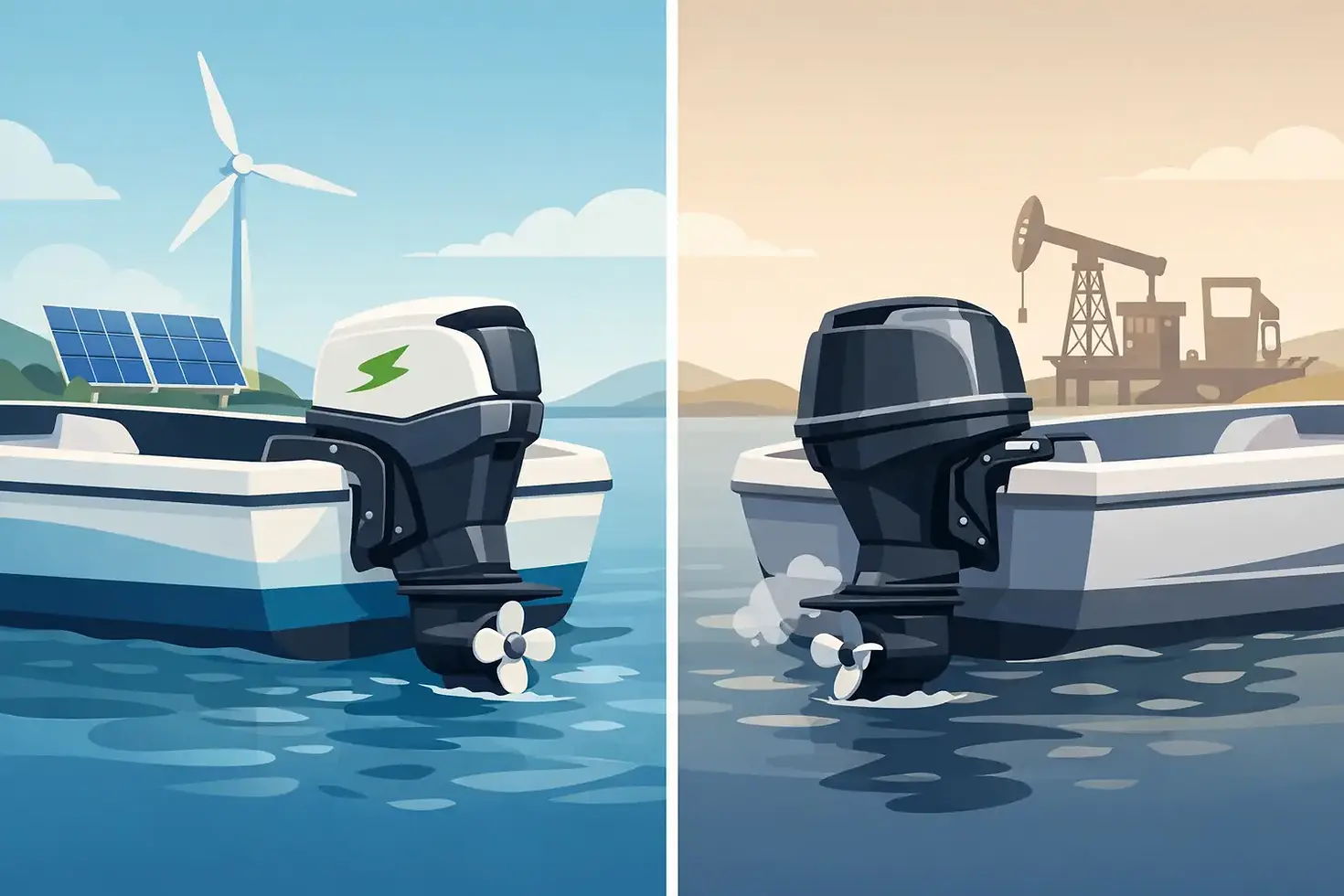
Electric Outboard vs Gas Outboard
A cold start at the ramp tells you a lot. One boat fires up with noise, fumes, and vibration. Another slips off the trailer almost silently, hits the throttle, and goes. That is the real starting point for the electric outboard vs gas outboard debate - not hype, not theory, but what actually happens when you leave the dock.
For years, gas owned the performance conversation because electric options were mostly limited to low-thrust trolling applications. That is changing fast. Serious electric outboards now exist in power classes that matter to real boaters, including setups capable of getting a boat on plane. So the better question is no longer whether electric is interesting. It is whether electric or gas is the better fit for the way you actually run your boat.
Electric outboard vs gas outboard: what really separates them
The biggest difference is not just fuel source. It is the entire ownership experience. Gas outboards are familiar, widely available, and proven across almost every boating segment. They offer quick refueling, established service networks, and long run times if you carry enough fuel.
Electric outboards attack the category from a different angle. They deliver instant torque, dramatically lower noise, fewer moving parts, and less routine maintenance. They also remove a lot of the mess boaters have simply accepted for decades - no gasoline smell, no oil changes, no spark plugs, no winterizing in the usual sense.
If you are comparing the two strictly on old assumptions, gas still sounds like the safe answer. If you are comparing actual use cases, the gap is much narrower than many boaters think.
Performance is no longer a gas-only advantage
This is where the conversation has changed the most. A lot of people still picture electric marine propulsion as slow, limited, and only useful for creeping around a cove. That picture is outdated.
A modern electric outboard delivers torque immediately. When you push the throttle, the response is there right away. That can make low-speed handling feel sharper and acceleration feel surprisingly strong, especially on lighter hulls and boats built for inshore, flats, or recreational use.
Gas outboards still hold an advantage in raw top-end flexibility across the broadest range of applications. If you want to run hard all day, cover long distances, and refuel in minutes, gas remains the simpler tool. But if your boating is built around shorter trips, repeatable routes, protected water, nearshore runs, or half-day sessions, electric starts looking a lot less like a compromise and a lot more like a smarter drivetrain.
That is especially true now that brands like Stealth Electric Outboards are building all-electric models in horsepower classes serious boaters actually care about. Once electric can plane a boat, the whole conversation changes.
Torque, hole shot, and throttle feel
Gas horsepower still matters, but electric torque changes how power shows up. Electric motors make peak torque differently than internal combustion engines, and on the water that often translates to strong launch feel and crisp throttle response.
That does not mean every electric outboard beats every gas engine. Hull design, weight, prop setup, battery configuration, and intended speed all matter. But the old assumption that electric automatically means weak is wrong. For many boaters, the first test ride is what resets expectations.
Range is where the choice gets personal
Range is the most honest dividing line in electric outboard vs gas outboard decisions. Not because electric cannot do the job, but because it forces you to define the job clearly.
If your day on the water means long runs, unpredictable detours, or hours at high throttle, gas is still easier to live with. You can carry more fuel, refill quickly, and keep going. That kind of flexibility matters for offshore use, remote areas, and boaters who do not want to plan around charging windows.
If your use is more predictable, electric becomes much more practical. A lot of recreational boating is local. It is running to a fishing spot, cruising the lake, making a nearshore trip, or spending a few hours on the water and coming home. In those cases, charging overnight and leaving full can be more convenient than hauling fuel cans or stopping at a marina.
The key is being honest about your throttle habits. Range changes dramatically with speed. That is true for any propulsion system in practice, but battery-backed systems make you pay closer attention to it. A boater who runs moderate speeds on known routes will have a very different electric experience than one who wants to pin the throttle for most of the day.
Noise and vibration are not small details
This part gets underestimated until you spend real time with it. Gas outboards have improved, but they still bring combustion noise, idle vibration, and exhaust note into every trip. Some boaters like that. Others have simply gotten used to it.
Electric outboards strip most of that away. The boat feels calmer. Conversations are easier. Early morning departures are less disruptive. Anglers can work water without announcing themselves from a distance. Families get a smoother ride with less mechanical drama in the background.
That quiet is not just a comfort feature. It changes how the boat feels to use. Once you have spent time underway without engine rumble and fumes hanging around the stern, going back can feel dated.
Maintenance is a real advantage for electric
Gas engines demand attention because internal combustion is mechanically busy. You have oil systems, fuel systems, cooling components, ignition parts, filters, belts in some applications, and seasonal maintenance concerns. Even reliable gas outboards ask for regular service and a level of owner involvement.
Electric outboards are mechanically simpler. Fewer moving parts means fewer wear items and fewer maintenance tasks. That does not mean zero responsibility. Batteries, electronics, rigging, and corrosion prevention still matter in a marine environment. But the service profile is typically cleaner and less demanding.
For many owners, that is one of the strongest reasons to switch. Less downtime. Less scheduled maintenance. Less guessing whether stale fuel or a neglected service item is about to ruin a weekend.
Cost depends on how long you keep the boat
Up front, gas often looks easier. The initial purchase can be lower depending on the setup, and the supporting infrastructure is familiar. That is why some buyers stop the analysis too early.
The longer view is more interesting. Electric can reduce operating costs through lower energy cost, fewer service needs, and less routine maintenance. Over time, that can narrow or even reverse the economics depending on usage.
Still, this is not a blanket win. Battery systems are a major part of the equation, and the numbers depend heavily on how often you boat, how long you keep the rig, and what local charging access looks like. If you boat rarely and prioritize lowest upfront spend, gas may still pencil out. If you run often and hate maintenance, electric can make financial sense faster than expected.
Infrastructure and support still matter
Gas wins on universal access today. Fuel is everywhere. Service is established. Most marinas, mechanics, and boat owners understand the system.
Electric is catching up, but support quality depends on the brand, product maturity, and dealer network. That means buyers need to look beyond the motor itself. Ask about charging expectations, battery integration, software diagnostics, warranty support, and who handles service in your area.
A serious electric outboard should be evaluated like a serious propulsion system, not like a gadget. The right manufacturer understands rigging, hull matching, dealer support, and real-world boating demands.
Which one is right for your boat?
If you run long distances, boat in remote areas, need instant refueling, or operate in use cases where maximum range matters more than anything else, gas is still the practical answer.
If you want instant torque, quieter operation, lower maintenance, cleaner ownership, and performance that no longer feels like a science project, electric deserves a hard look. That is especially true for anglers, inland boaters, shallow-water users, and recreational owners whose boating patterns are repeatable and close to home.
The old debate framed electric as a niche alternative. That framing is wearing out. For a growing number of boats and owners, electric is not the future category. It is the better-fit category right now.
The smartest buyers are not asking which technology sounds familiar. They are asking which one fits their water, their routes, and their standards. That is where the answer gets clear.


Comments