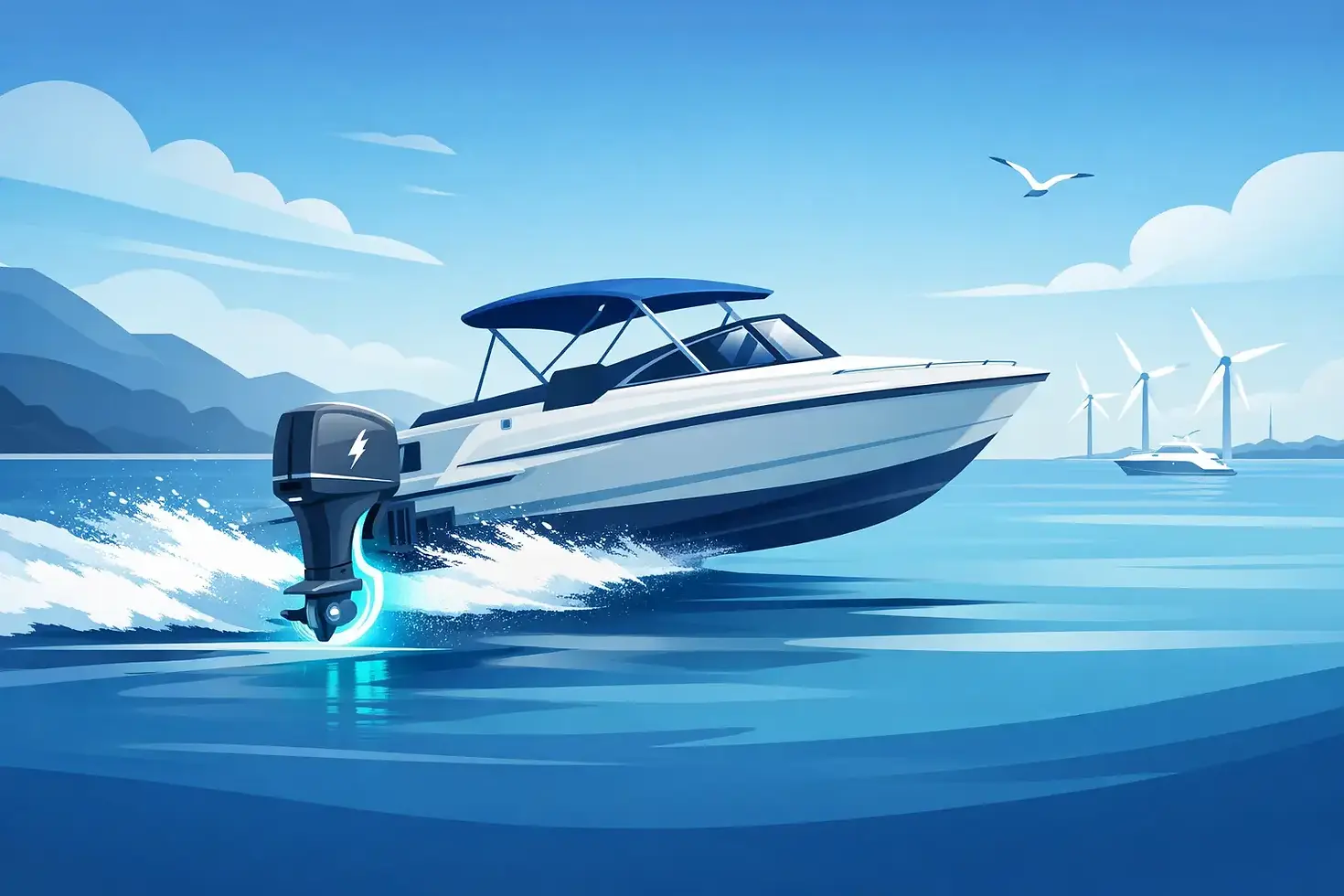
Boat Planing With Electric Propulsion
The moment a boat climbs out of the hole and rides on top of the water, the whole conversation changes. That is why boat planing with electric propulsion matters so much. Quiet operation is nice. Low maintenance is nice. But if an electric outboard cannot lift the hull, carry the load, and deliver usable speed, most serious boaters are not interested.
For years, electric marine talk stayed stuck in the same lane - slow cruising, trolling, and short-range utility. That left a big gap between what boaters wanted and what electric systems could actually do. Planing is where that gap gets exposed fast. It is also where modern high-power electric outboards are starting to prove that electric propulsion is not limited to low-speed use.
What boat planing with electric propulsion really means
A boat on plane is no longer pushing through the water in pure displacement mode. At speed, hydrodynamic lift raises more of the hull, reduces wetted surface, and lets the boat run flatter and faster. That transition takes power, but just as important, it takes the right kind of power at the right time.
That is one reason electric propulsion deserves a more serious look. Electric motors make torque immediately. There is no waiting for RPM to build the way many boaters are used to with gas engines. When setup is right, that instant torque can help a boat break over and climb onto plane with strong initial thrust.
Still, there is no magic here. Torque alone does not plane a boat. Hull shape, total weight, prop selection, motor output, battery voltage, and runtime demands all affect whether the boat will plane easily, plane reluctantly, or never get there at all.
Why some electric boats plane and others do not
The biggest mistake in this category is treating all electric propulsion as if it belongs in the same performance class. It does not. A low-thrust electric setup built for trolling is not a planing system. A high-output electric outboard designed for real propulsion is a different machine entirely.
If you are evaluating boat planing with electric propulsion, start with the same hard question you would ask of any outboard: how much usable power is actually reaching the prop? Marketing language can blur that line, especially in electric marine, where some products are sold on feel-good claims instead of on-water performance.
A planing hull typically needs enough thrust to overcome its own bow rise, load, and drag during acceleration. Lightweight skiffs, flats boats, jon boats, and some small center console layouts can get on plane with less power than heavier deep-V hulls, pontoons, or workboats. Add passengers, gear, live wells, coolers, and rough water, and the power requirement climbs fast.
This is why horsepower class matters. Serious electric outboards in the 40HP to 70HP range are playing in a completely different space than entry-level electric systems. They are aimed at boaters who need acceleration, lift, and usable top-end speed, not just quiet maneuvering around the dock.
Hull design changes the answer
A light, efficient hull can make electric planing look easy. A heavy hull with lots of drag can make a strong motor feel undersized. Flat-bottom and semi-V boats often jump up faster in calmer water, while deeper-V hulls may demand more power to break over but deliver a better ride once running.
The point is simple: electric propulsion does not erase basic boat physics. It rewards efficient setups and punishes bad matches.
Weight is the deal-breaker most buyers underestimate
Battery weight counts. Passenger weight counts. Gear weight counts. With electric propulsion, that conversation gets more serious because energy storage is part of the propulsion package. If the boat is loaded beyond what the hull and motor combination can realistically support, planing performance will suffer first.
That does not mean electric boats are automatically too heavy to plane. It means the boat has to be rigged intelligently. Battery placement, center of gravity, and overall load distribution all matter. A well-balanced electric setup can feel sharp and responsive. A poorly balanced one can squat, struggle, and waste power.
The real advantage electric brings to planing performance
The strongest case for electric is not that it changes hydrodynamics. It is that it delivers power differently.
Instant torque gives the boat a strong launch feel. That can be especially useful in shallow-water applications, for anglers who want quick response, or for recreational boaters who care more about getting on plane cleanly than bragging about top speed numbers. In many real-world uses, hole shot matters more than a few extra miles per hour at the top end.
Electric also delivers that power with less vibration, less mechanical complexity, and fewer moving parts than a traditional gas outboard. For boaters who want strong propulsion without fuel system headaches, oil changes, or the noise that comes with combustion, that matters. The experience feels different because it is different.
But there is a trade-off, and serious buyers already know it. Sustained high-speed running takes energy. The harder you push a planing hull, the faster you burn through battery capacity. That is not a flaw unique to one brand. It is the core planning challenge of high-performance electric boating.
How to judge if your boat can plane with electric propulsion
The right question is not, can electric plane a boat? The right question is, can this electric outboard plane my boat in the way I actually use it?
Start with hull type and dry weight. Then factor in real operating load, not brochure weight. Include fuel-equivalent battery mass, passengers, gear, water conditions, and how often you need to accelerate onto plane during a normal outing.
Next, look at motor class honestly. If your current gas setup barely planes the boat under load, replacing it with an underpowered electric system will not improve the outcome. If your hull responds well to moderate horsepower and clean setup, a properly matched electric outboard may perform better than skeptics expect.
Propeller setup matters here too. Just like gas, prop choice changes acceleration, efficiency, and top speed. A prop that helps one boat jump on plane may hold another back. Trim angle, motor height, and hull cleanliness also affect results. Small setup changes can be the difference between struggling over the hump and popping onto plane with authority.
What performance-minded buyers should ask
Ask for on-water proof, not theory. Ask what hull was tested, what the total load was, what battery setup was used, and what speed and runtime were achieved on plane. If those details are missing, the claim means very little.
This is where performance-first electric brands stand apart. They understand that boaters are not buying promises. They are buying thrust, acceleration, reliability, and the confidence that the boat will perform when it is loaded for a real day on the water. That is exactly why companies like Stealth Electric Outboards have focused on horsepower classes that address the planing objection head-on.
Where electric planing makes the most sense right now
Not every use case is equal. Electric planing makes the most sense where boaters want strong short-to-medium-run performance, predictable daily use, lower maintenance, and less noise without giving up real propulsion. That can fit anglers running to nearby spots, recreational boaters making repeat local trips, and owners who operate in areas where quiet boating is a real advantage.
It is also a strong fit for buyers who are tired of pretending that all electric marine products are built for the same job. They are not. If your goal is trolling, buy for trolling. If your goal is planing, buy for planing.
The market is finally getting clearer on that point. High-power electric outboards are forcing a more honest standard. Either the system can carry the load and get the hull on top, or it cannot.
The bottom line on boat planing with electric propulsion
Boat planing with electric propulsion is real, but it is not automatic. It depends on matching serious motor output with the right hull, the right battery capacity, and a setup that respects weight and balance. Buyers who understand that can cut through the noise fast.
The interesting shift is not that electric can now cruise quietly. It is that electric is starting to earn a place in performance conversations that used to belong only to gas. For boaters who want clean propulsion but refuse to give up lift, acceleration, and usable speed, that is where the future starts to get practical.
If you are evaluating the switch, focus less on broad claims and more on whether the package will put your hull on plane, carry your real load, and do the job without excuses.


Comments