Guide to Repowering an Aluminum Fishing Boat
- smasterson2
- Jul 22
- 6 min read
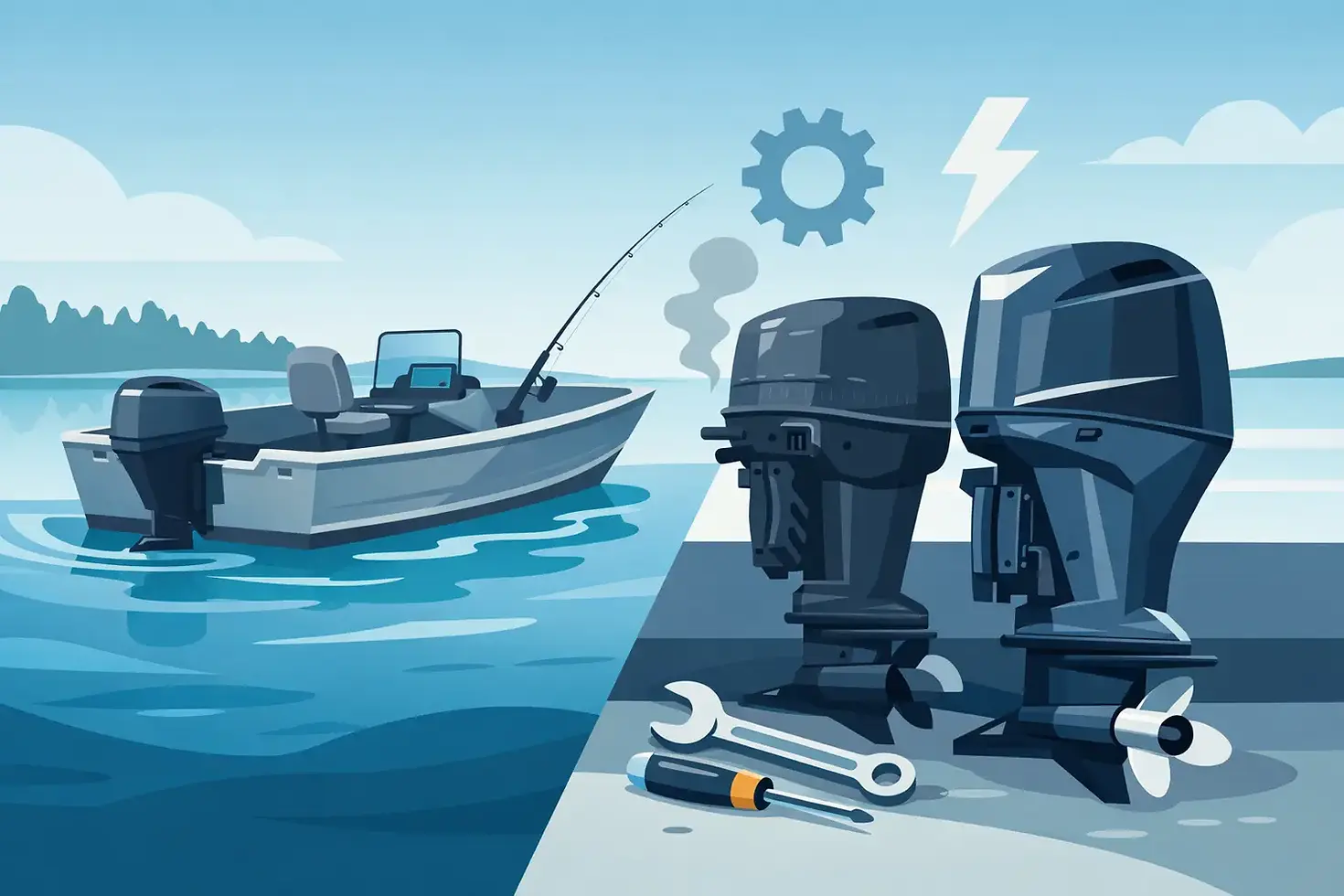
A tired outboard can turn a good aluminum rig into a boat that hesitates at the ramp, struggles to plane with two anglers aboard, and makes every run to the next point feel longer than it should. This guide to repowering an aluminum fishing boat is built for owners who want to restore real performance, whether that means a modern gas outboard or a serious electric setup designed to do more than push a boat around the marina.
Start With the Hull, Not the Motor
Repowering is not a matter of buying the biggest horsepower number you can afford. Your boat's hull, transom, load, and intended use establish the limits. Start with the capacity plate. It lists the boat's maximum horsepower, maximum person capacity, and often a weight limit. That maximum horsepower rating is not a suggestion. Exceeding it can create handling and insurance problems, and it can put more stress on a transom that was never designed for the load.
Next, be honest about how the boat runs on a normal fishing day. An aluminum hull that performs well with one person and an empty livewell may feel completely different with a partner, a full cooler, batteries, tackle, a dog, and a livewell full of water. Repower for the boat you actually use, not the stripped-down boat sitting on the trailer.
Hull design matters too. A light, flat-bottom jon boat needs less power to get moving than a deep-V aluminum multispecies boat. A wide-beam bass boat may plane quickly but demand more torque when loaded. If your current motor has always struggled to plane the boat, replacing it with the same nominal horsepower may not solve the problem. The issue could be prop selection, motor mounting height, weight distribution, or a power choice that was marginal from day one.
Choose Horsepower for the Job
For many aluminum fishing boats, the best repower sits near the upper end of the factory horsepower rating. That does not mean maximum horsepower is automatically right for every owner. It means that loaded performance, acceleration, and the ability to stay on plane in rough water deserve more weight than a lightly loaded top-speed number.
A smaller outboard may cost less up front and use less energy at wide-open throttle. But if it takes too long to plane, runs hard all day, or cannot hold plane with a typical load, the savings disappear in frustration. Conversely, a max-rated motor can add purchase cost, battery or fuel weight, and potentially a more demanding rigging job. The right answer depends on how far you run, how heavily you load the boat, and whether your water regularly gets rough.
For electric repowers, compare usable system output and real on-water performance, not just marketing labels. A serious electric outboard needs enough continuous power and torque to accelerate the hull onto plane, while the battery system needs enough usable energy for the way you fish. A powerful motor without sufficient battery capacity is a short-range rocket. A huge battery bank paired with too little motor will not give the boat the authority to perform.
Stealth Electric Outboards focuses on the part many boaters refuse to compromise on: electric outboards in 40HP through 70HP classes built for boats that need genuine planing power.
Think in Runs, Not Just Hours
Range is the central planning question in an electric repower. Do not ask only, How many hours will it run? Ask how many miles you travel, how much of that travel happens at planing speed, how long you spend idling or working a shoreline, and how much reserve you want when wind and current build.
Planing uses far more energy than slow-speed cruising. That is not a defect in electric propulsion. It is the physics of pushing a boat across the water at speed. An electric system can be a strong fit for anglers who run predictable distances, fish lakes or protected waters, return to a home dock, or can charge reliably between trips. It takes more planning for long, high-speed runs far from charging access.
Inspect the Transom Before You Commit
Aluminum boats have a reputation for toughness, but a hard life leaves evidence. Before ordering a motor, inspect the transom inside and out. Look for cracked welds, corrosion around fasteners, loose rivets, deformation near the motor mount, soft backing material, or water trapped in compartments. A new outboard can expose weaknesses that an old, underperforming motor never had the strength to reveal.
Check the transom height as well. Most outboards are built around standard shaft lengths, commonly 20 inches for many fishing boats and 25 inches for larger or deeper-transom hulls. Measure rather than assume. A shaft that is too short can ventilate in turns or rough water. One that is too long can create drag and affect handling.
Weight is just as important as horsepower. Compare the complete installed package, including the motor, batteries or fuel tank, controls, cables, charging equipment, and any added reinforcement. Electric propulsion can shift weight into the hull through battery placement. That can be an advantage when it lowers the center of gravity and improves balance, but only if the system is designed around the boat.
Build the Electrical System Like a Propulsion System
An electric outboard conversion is not a trolling-motor upgrade. It is a propulsion installation. That means marine-grade battery storage, properly sized conductors, circuit protection, secure mounting, ventilation where required, charging capability, and a clear emergency shutdown plan.
Battery placement should support both safety and handling. Batteries must be restrained so they cannot shift in chop, hard turns, or trailering. Keep heavy battery mass close to the boat's centerline when possible, and avoid piling all of it at the stern. A stern-heavy aluminum boat may bow-up excessively during acceleration, take longer to plane, and porpoise at speed.
Charging deserves the same attention as the motor itself. Determine whether you will charge from a standard household circuit, a higher-capacity shore-power connection, or another source at your dock or storage location. Then calculate realistic recharge times. If you fish hard on consecutive days, an overnight charge may not be enough unless the charging setup matches the battery capacity.
A qualified marine installer can be worth the money here. Clean cable routing, correct fusing, watertight connections, and professionally installed controls make the boat safer and easier to service. They also prevent the common mistake of treating a high-output electric system like a weekend wiring project.
Match the Prop, Mounting Height, and Controls
Even the right motor can disappoint with the wrong propeller. Prop selection determines how the motor loads under acceleration, where it reaches its operating range, and how effectively it carries a fishing load. A prop that is too aggressive can make the boat feel sluggish out of the hole. One with too little pitch may launch hard but run out of efficiency and top speed.
Start with the manufacturer's recommended prop range, then test the boat at its typical fishing weight. Record wide-open throttle RPM, GPS speed, time to plane, and handling through turns. Do not judge the result by speed alone. A boat that planes quickly, holds plane at a lower speed, and stays composed in a chop is often the better fishing platform.
Motor mounting height affects those results. If the motor is mounted too low, drag increases and performance can suffer. Too high, and the prop can lose bite in turns or rough water. Aluminum hulls respond noticeably to small setup changes, especially lighter boats. Test carefully, one change at a time.
Controls are part of the experience as well. Decide whether you want a tiller, side mount, center console controls, or a remote system that lets you preserve an existing helm layout. Confirm that steering, throttle, trim, displays, and safety lanyards are all compatible before installation day.
A Smart Repower Checklist
Before you place an order, verify these five points:
The capacity plate supports the planned horsepower and installed weight.
The transom is structurally sound and matches the motor's required shaft length.
Your typical loaded weight is reflected in the horsepower and prop decision.
Your battery capacity, charging access, and planned routes support the desired electric range.
A marine installer or dealer has confirmed rigging, control, steering, and charging requirements.
Make the First Season a Test Season
The first few trips after a repower are for dialing in the package. Carry your normal fishing gear. Test with another angler aboard. Watch how the boat responds with a full livewell and different trim settings. Track energy use or fuel burn across familiar routes instead of relying on one wide-open-throttle pass.
A well-planned repower gives an aluminum fishing boat a second life without changing what made it useful in the first place: shallow draft, tough construction, low maintenance, and the freedom to chase the next bite. Set it up around your real fishing day, leave a meaningful performance and range margin, and the boat will feel ready for the water instead of barely keeping up with it.



Comments