
Top Signs Your Outboard Needs Replacement
- smasterson2
- Aug 11
- 6 min read
The top signs your outboard needs replacement usually show up long before the motor quits for good. The real question is whether you are dealing with one repairable issue or a powerhead, lower unit, fuel system, and electrical system all asking for attention at once. When your boat cannot deliver the hole shot, speed, range, or reliability you bought it for, throwing more money at an aging motor can become the expensive choice.
A repower is not just about getting back on the water. It is a chance to match your propulsion to the way you actually use the boat now - whether that means more torque for a loaded bay boat, quiet early-morning runs to the fishing grounds, or serious electric power that can get a hull on plane.
Top Signs Your Outboard Needs Replacement
1. Breakdowns are becoming part of the boating plan
One no-start after a winter layup does not condemn an outboard. Neither does a failed sensor, tired battery, clogged fuel filter, or neglected impeller. Those are normal maintenance items.
The line gets crossed when reliability becomes a gamble. If you are carrying extra tools because you expect a no-start, losing trips to the repair shop, or returning to the ramp at reduced power, the engine is no longer doing its primary job. A boat motor has to be dependable under load, not merely capable of running on a hose in the driveway.
Look at the pattern over the past two or three seasons. Multiple unrelated repairs - ignition one month, cooling the next, then fuel delivery or shifting problems - often point to an outboard reaching the end of its economical service life. The bill for each individual fix may seem manageable. The cumulative cost and lost time tell the real story.
2. It has lost the power to perform
A healthy outboard should turn the correct wide-open-throttle RPM with the right propeller and a normal load. If the boat is slow to plane, falls off plane with passengers aboard, struggles in a chop, or cannot reach its expected RPM, do not assume age is the only cause. A damaged prop, waterlogged hull, poor rigging, fuel restriction, compression issue, or wrong engine height can all steal performance.
But after those issues are corrected, persistent power loss is serious. Low compression, cylinder damage, chronic overheating, or a worn-out powerhead can leave an engine running just well enough to avoid an obvious failure while making the boat frustrating to use.
Performance-minded boaters feel this change immediately. The bow stays high too long. The boat needs more throttle to hold cruise. A full cooler and two extra passengers turn a normal outing into a sluggish one. If the motor cannot produce the thrust your hull needs, it is time to price a replacement instead of accepting less boat every season.
3. Major repairs are approaching the engine's value
A cracked block, failed lower unit, significant corrosion, damaged cylinders, or a powerhead rebuild changes the conversation. There are cases where a major repair makes sense, especially on a newer motor with known history and otherwise excellent condition. A straightforward lower-unit repair on a well-maintained engine is not an automatic reason to repower.
The decision changes when the repair estimate is a large percentage of the motor's current value and does not address other aging components. Spending heavily on the powerhead does not renew old wiring, controls, fuel lines, steering, mounts, cooling parts, or a lower unit with its own wear history.
Ask for a complete assessment, not only a quote for the immediate failure. What else is likely to need work in the next 12 to 24 months? Will the repair restore dependable performance, or simply buy time? A low repair price is not a bargain if it puts you back in the shop before summer ends.
4. Corrosion is moving beyond cosmetics
Saltwater is unforgiving, particularly when an outboard has not been flushed, stored, or maintained consistently. Surface corrosion on fasteners and external brackets can be addressed. Deep corrosion around the exhaust housing, swivel bracket, transom clamp, engine mounts, steering components, or cooling passages is different.
Corrosion can turn routine maintenance into a major job when bolts snap, parts seize, or castings deteriorate. It can also create a safety issue if structural components and mounting hardware are compromised. Inspect carefully for bubbling paint, swollen aluminum, persistent salt buildup, loose mounts, and damage hidden under cowling panels.
Freshwater owners are not exempt. Older motors can suffer from internal corrosion, degraded wiring, and seized hardware after years of damp storage. Condition matters more than the water type alone.
5. Fuel and oil problems never truly go away
Modern gasoline outboards are far better than the engines many boaters grew up with, but they still depend on fuel quality, clean delivery systems, electronics, cooling, lubrication, and routine service. Ethanol-blended fuel can add another layer of trouble when a boat sits for long periods.
If your outboard repeatedly develops fuel contamination, injector issues, carburetor problems, oiling concerns, rough idle, surging, or hard-start behavior after professional diagnosis and repair, stop treating each symptom in isolation. An older engine may have aging hoses, tanks, wiring, and components that make the whole system unreliable.
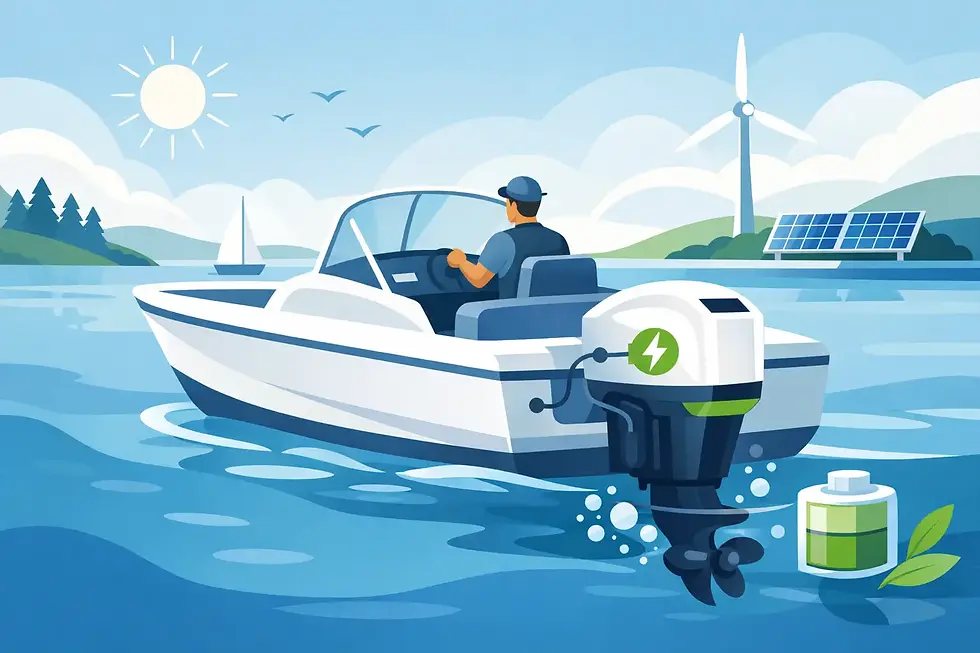
This is also where a change in propulsion can be worth serious consideration. For boaters whose use pattern fits available battery capacity and charging access, electric propulsion removes gasoline, oil changes, fuel filters, carburetors, injectors, exhaust-related maintenance, and many of the seasonal fuel-storage headaches. It is not a universal answer - range planning, battery capacity, charging time, boat weight, and intended speed still matter - but it is a fundamentally different ownership equation.
6. The motor no longer fits your boat or how you use it
An outboard can be mechanically sound and still be the wrong motor. Maybe you bought a larger boat, added a jack plate, started carrying more gear, or shifted from casual cruising to tournament fishing. Maybe the boat came with an underpowered engine that has always struggled to plane a real-world load.
Conversely, some owners are ready to leave the noise, exhaust, vibration, and fuel logistics behind without giving up usable power. That does not mean replacing a gas outboard with a low-thrust auxiliary motor and pretending the result is comparable. A serious repower must be sized for the hull, load, intended speed, and duty cycle.
High-output electric outboards have changed what is possible for the right application. Stealth Electric Outboards builds 40HP, 50HP, 60HP, and 70HP electric models for boaters who expect real thrust and planing capability, not just quiet trolling. The fit still has to be evaluated honestly, including battery setup and where you can charge. When it fits, the result is a cleaner, quieter boat with immediate torque and far less mechanical complexity.
Before You Replace the Outboard, Confirm the Diagnosis
Do not repower based on frustration alone. Start with a qualified inspection that includes compression or leak-down testing where appropriate, cooling-system condition, lower-unit oil inspection, engine-mount condition, electrical output, fuel-system testing, and a sea trial under normal load. Confirm the propeller pitch, engine height, hull condition, and weight distribution before blaming the motor for poor performance.
Then compare two numbers: the cost to make the current engine reliably usable and the cost to repower correctly. Include rigging, controls, propeller selection, batteries and charging equipment for an electric system, installation, and any transom or steering work. A replacement is a larger upfront decision, but it can eliminate the cycle of repair bills and missed days that quietly drains value from an old motor.
Choose the Repower Around Real Use
The best replacement is not automatically the highest horsepower model or the cheapest option on a quote sheet. Think about your typical load, the water you run, how quickly you need to plane, your normal trip distance, and whether you have reliable charging access. A lightly loaded freshwater fishing boat has different requirements than a coastal center console making long runs in changing conditions.
Be honest about your non-negotiables. If your boat must cover long distances at high speed with limited charging opportunities, a conventional setup may still be the practical fit. If you operate within a defined range, value instant torque and quiet operation, and want to eliminate fuel-related maintenance, high-performance electric propulsion may be the stronger move.
Your outboard should give you confidence when the throttle goes down, not another reason to watch the gauges and hope. When repairs keep stacking up or performance keeps fading, a replacement is not surrender. It is the moment to put the right power back on the transom and get more from every hour on the water.


Comments