
Electric Outboard Versus Sterndrive: Which Wins?
A hard-throttled hole shot tells the truth faster than a brochure. For boaters weighing an electric outboard versus sterndrive, the real question is not whether electric power is quiet or clean. It is whether it delivers the acceleration, planing capability, range, and boat control your days on the water demand.
Sterndrives have earned their reputation. They package substantial power into the hull, preserve a clean transom, and remain familiar to owners of runabouts, bowriders, and many larger recreational boats. But familiar is not the same as best. A high-performance electric outboard changes the decision by putting serious propulsion, instant torque, and simpler service access at the back of the boat.
Electric Outboard Versus Sterndrive: The Core Difference
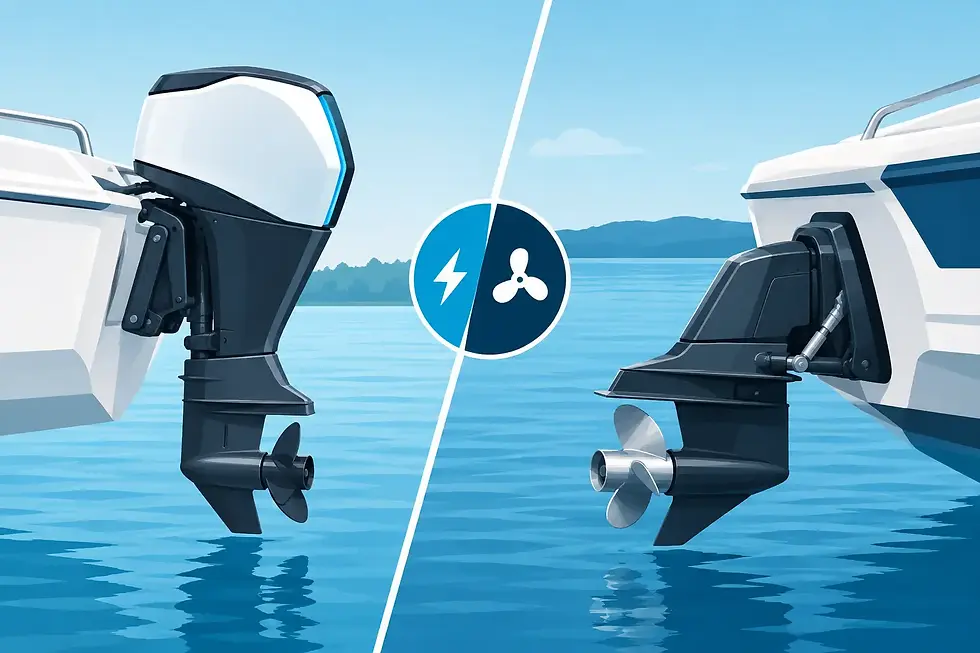
A sterndrive, also called an inboard/outboard or I/O, places the engine inside the boat and sends power through a drive unit mounted through the transom. Most are gasoline-powered, though diesel versions exist. The installation is integrated, heavy, and mechanically complex, with an engine compartment, exhaust system, cooling components, steering hardware, bellows, and a submerged drive.
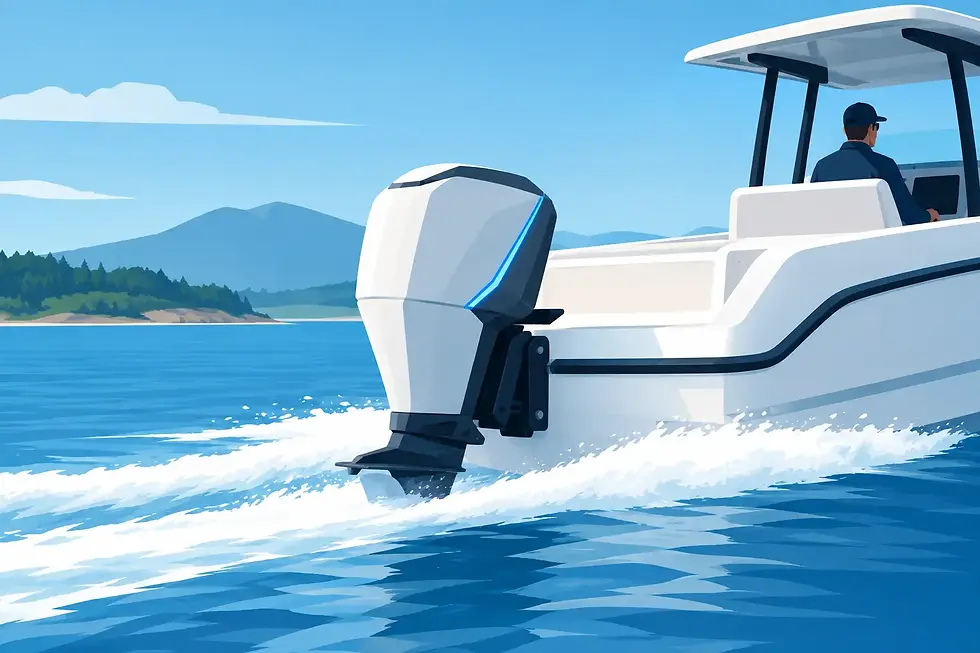
An electric outboard is mounted outside the transom. Its motor, controls, and lower unit are designed as a propulsion package, while battery capacity is installed where it best supports the boat's balance and available space. The fundamental advantage is architecture: the drive system is accessible, removable, and separate from the passenger area.
That distinction affects nearly every ownership decision - from service access to cockpit layout to how the boat feels when the throttle goes down.
Planing Performance Starts With Torque
The old assumption was simple: electric propulsion was for trolling motors, displacement hulls, and quiet short-range cruising. That assumption does not hold when an electric outboard is engineered for real horsepower and matched correctly to the hull.
Electric motors deliver torque immediately. There is no revving to build power and no waiting for an engine to reach its useful range. The response at the throttle is direct. For anglers pulling away from a launch, coastal boaters crossing a chop, or families trying to get a loaded boat onto plane, that instant push matters.
A sterndrive can absolutely plane a boat quickly, particularly with a larger gasoline engine. It also has a long history in high-speed recreational applications. Yet its advantage depends on engine selection, propeller setup, load, and maintenance being right. An electric outboard removes the delay between throttle input and motor torque, making its acceleration feel more immediate and controlled.
The practical qualifier is battery energy. Horsepower gets a boat moving. Battery capacity determines how long you can keep demanding that power. A buyer who expects wide-open-throttle runs all afternoon needs to size an electric system around that reality, just as a sterndrive buyer needs enough fuel capacity for the day. There is no honest one-size-fits-all answer.
Space, Weight, and Boat Layout
Sterndrives put the engine low and near the center-rear of the boat. That can support a balanced ride and keep the swim platform clear of an outboard. On a boat designed around an I/O, that packaging can make sense.
The trade-off is the engine box. It consumes valuable interior volume, generates heat, and limits storage. The space under a rear sun pad or aft seating area often belongs to the drivetrain rather than the people onboard. Accessing the engine for basic checks can mean moving cushions, lifting covers, and working in a tight compartment.
An electric outboard frees the engine bay because there is no conventional internal-combustion engine inside the hull. That can create room for storage, gear, seating, or a cleaner deck layout. Batteries still require space and thoughtful placement, but they can be distributed to support weight balance instead of forcing every major component into one stern compartment.
Weight deserves a realistic look. Batteries are heavy, and a serious electric system is not weightless. A proper repower starts with the hull's capacity, transom rating, desired range, passenger load, and battery placement. The benefit is not that electric ignores physics. The benefit is that it gives builders and owners more flexibility in managing the weight that physics requires.
Maintenance Is Where the Ownership Gap Opens
A sterndrive has more moving systems and more points exposed to water. Seasonal ownership can include winterization, oil changes, fuel-system care, impeller service, bellows inspections, gear-lube changes, corrosion checks, and attention to exhaust and cooling components. In saltwater, the workload and stakes increase.
An electric outboard eliminates gasoline, engine oil, spark plugs, fuel filters, exhaust components, and many of the service tasks tied to combustion. That does not mean it needs no care. Propellers, seals, electrical connections, cooling components where applicable, and battery systems still deserve inspection. But the routine is fundamentally simpler.
For owners who would rather launch than schedule another engine appointment, this is not a minor benefit. Less mechanical complexity means fewer systems competing for attention during boating season.
Range: The Decision That Requires Honest Math
Range is the sterndrive's strongest practical case when the plan involves long, high-speed runs with limited charging access. Gasoline carries a lot of energy in a small volume, and refueling is fast. For offshore distances, full-day high-speed cruising, or routes without dependable charging, a gasoline sterndrive may remain the more workable choice.
Electric is strongest when the boat's mission is predictable: lake days, river runs, fishing grounds near the ramp, waterfront homes, marina-based boating, and repeatable local routes. Charging at home or at a slip changes the experience. Instead of detouring to a fuel dock, the boat can be ready from a plugged-in battery system.
Do not shop by claimed range alone. Look at the distance you actually travel, the speed you run, how often you plane, typical wind and current, passenger load, and the reserve you want at the end of the day. Running at lower speeds extends range dramatically. Running flat out uses energy quickly. That is true of every propulsion system, but electric makes the relationship far more visible.
Ride, Noise, and Control on the Water
A sterndrive's submerged prop and lower center of gravity can produce a familiar, planted feel in certain hulls. It may also be the right fit when preserving an unobstructed transom is a priority.
But electric outboards bring their own on-water advantage: quiet. Conversation stays conversation. Early-morning fishing does not begin with an engine roaring across the cove. Wildlife is less likely to disappear before you arrive. At cruising speeds, the sound of water against the hull becomes part of the ride again.
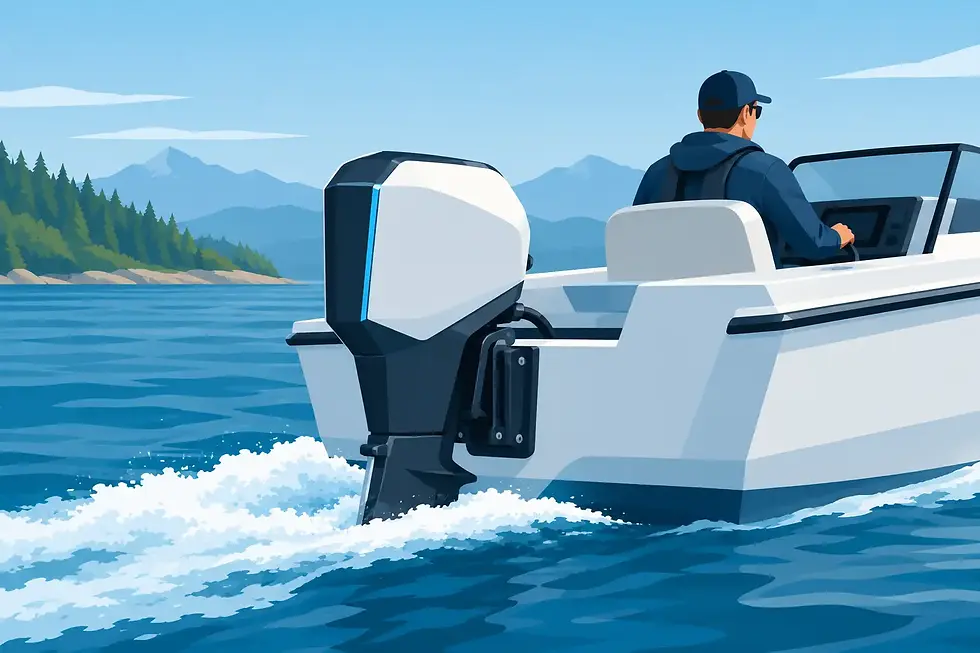
Quiet is not just a comfort feature. It changes boat control. Operators can hear instructions from a dock, notice changes in the hull, and communicate with passengers without shouting over combustion noise. Pair that with immediate torque, and the boat can feel more precise around ramps, slips, and tight shoreline approaches.
Installation and Repower Reality
Replacing a sterndrive is rarely a simple weekend project. The engine and drive must be removed, the transom assembly evaluated, and the replacement system fitted to an existing hull designed around inboard power. For some boats, that investment is justified. For others, it is a sign that the owner should consider a different platform.
Replacing an existing outboard with an electric outboard is generally more straightforward because the boat already has the right basic transom architecture. Rigging, controls, batteries, charging, and propeller selection still need professional attention, but the conversion avoids the major structural commitment of a sterndrive installation.
This is where horsepower-class electric outboards matter. Serious boaters should not be pushed toward underpowered equipment and told to adjust expectations. Stealth Electric Outboards is built around 40HP, 50HP, 60HP, and 70HP options because getting on plane is not an optional feature for many owners. It is the whole point.
Which System Fits Your Boat?
Choose a sterndrive when your boating depends on long, fast runs, rapid refueling, and a hull specifically designed to take advantage of an integrated inboard power package. It can still be a capable solution for larger runabouts and demanding distance profiles.
Choose an electric outboard when you want strong planing performance without gasoline, lower routine maintenance, instant torque, a quieter ride, and a propulsion system that keeps mechanical complexity outside the boat. It is especially compelling for local and repeatable boating where charging fits naturally into the way you already use your dock, driveway, or marina.
The best choice is not the one with the longest spec sheet. It is the one that matches the water you run, the distance you travel, and the kind of ownership you want after the boat is back on the trailer. Start with your real day on the water, size the power honestly, and choose the system that gives you more time driving instead of dealing with the machinery behind you.
Comments