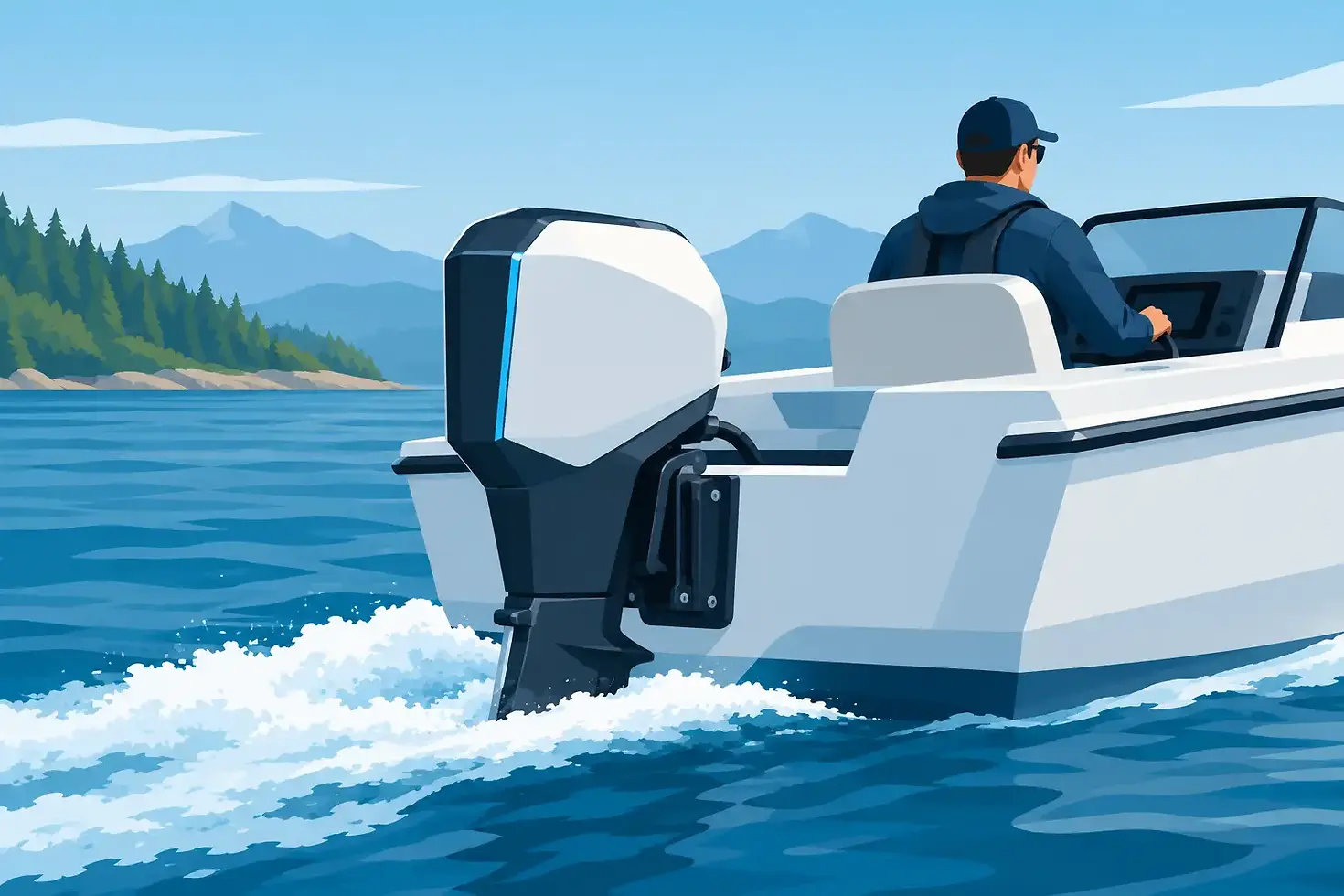
Electric Outboard Reliability Under Real Load
A boat does not care how impressive a motor looks at the dock. It cares what happens when the throttle goes down, the hull climbs onto plane, the afternoon heat rises, and the run back is still ahead. That is where electric outboard reliability gets proven - under real load, not light-duty trolling conditions.
For boaters considering electric propulsion in the 40HP to 70HP class, reliability is not a vague promise. It means consistent power delivery, predictable battery behavior, protected electronics, and a support path that gets you back on the water when something needs attention. The right system can eliminate many of the maintenance headaches tied to gasoline engines. But electric power demands a disciplined approach to system design and installation.
What Electric Outboard Reliability Really Means
A reliable electric outboard is more than a reliable motor. It is a complete propulsion system: motor, inverter, battery bank, battery management system, cabling, cooling, charging equipment, controls, and the boat itself. Any weak link can limit the whole package.
That is why a serious high-power electric setup should be judged by how those components work together at sustained output. A motor may be capable of strong peak power, but the system also needs to manage heat, voltage drop, current draw, and state of charge without surprises. The difference matters when you are carrying passengers, running against wind and current, or asking a hull to stay on plane.
Reliability also means repeatability. You should know what to expect when you launch: how the boat will accelerate, how the battery will respond, what range is realistic for the day, and how the system communicates its status. Quiet operation is a benefit. Dependable thrust is the requirement.
The Components That Decide Reliability
Motor and inverter protection
The electric motor has fewer moving parts than a combustion engine. There are no oil changes, spark plugs, fuel filters, carburetors, injectors, or exhaust-system problems to chase down. That mechanical simplicity is a real advantage.
But fewer moving parts does not mean fewer engineering demands. At high power, the inverter and motor must process substantial electrical current while controlling temperature precisely. Quality thermal management is not optional. If a system cannot shed heat under sustained load, it may reduce output to protect itself or suffer premature component wear.
Look for a propulsion system engineered for marine duty rather than adapted from a low-demand application. The operating environment is unforgiving: vibration, humidity, spray, changing water temperatures, hard acceleration, and long periods at high throttle. The hardware needs to be built around that reality.
Battery quality and battery management
The battery bank is the fuel tank, power reserve, and operating brain of an electric boat. Its health has a direct effect on performance and reliability.
A properly matched battery system delivers the current the outboard needs without excessive voltage sag. If the battery cannot support the demand, the motor may limit power even when the display shows usable charge remaining. That is why battery capacity alone is not enough. Continuous discharge capability, battery chemistry, cell quality, temperature behavior, and battery management system calibration all matter.
The battery management system, often called the BMS, protects the pack from conditions that can damage cells. It monitors temperature, voltage, and current, and it can restrict operation if a limit is reached. That protection is valuable, but it needs to be correctly sized for the application. A BMS that is undersized for a high-output outboard can become the bottleneck.
For performance-minded boaters, the question is simple: can the battery system repeatedly supply the power required to get the boat moving and keep it moving? Build around that answer, not just a headline amp-hour number.
Wiring, connections, and installation
High-voltage marine systems demand clean, professional installation. Poorly sized cables, loose terminals, inadequate circuit protection, or exposed connections can create heat, voltage loss, corrosion problems, and avoidable shutdowns.
This is where reliable systems separate themselves from improvised conversions. Cable routing should be protected from abrasion and heat. Connections should be secure, sealed where appropriate, and accessible for inspection. The battery bank must be mounted correctly and secured for the motion of the boat. Charging equipment must be compatible with the battery system and installed to marine standards.
The outboard can be excellent and still underperform if the rigging is wrong. Treat installation as part of the propulsion package, because it is.
Heat, Water, and Saltwater Reality
Waterproofing is only one part of marine reliability. Saltwater adds corrosion, conductive residue, and a level of punishment that exposes shortcuts quickly. Freshwater boaters face different concerns, but moisture and vibration still matter.
After use in salt or brackish water, rinse the outboard and inspect visible connectors, hardware, and cable runs. Keep an eye on areas where salt can collect. This is not complicated maintenance, but it is smart ownership. Small checks prevent minor issues from turning into downtime.
Heat deserves the same attention. Batteries and power electronics operate best within their intended temperature range. A hot day, a dark enclosed battery compartment, and repeated full-throttle runs can create a demanding thermal environment. Proper ventilation and system placement help protect performance. If your boating style includes long high-speed runs, design for that from the start rather than assuming a light-duty battery installation will carry the load.
High Power Changes the Conversation
Electric propulsion has earned a reputation for quiet cruising and low-speed trolling. That is only part of the story. Once you expect an electric outboard to plane a boat, accelerate hard, and carry a serious load, the reliability conversation becomes more demanding.
Planing requires a large burst of power. Staying on plane requires sustained power. Range at that speed will be very different from range at idle or no-wake speed. None of that makes electric propulsion less reliable. It means the owner must match the system to the mission.
A lightweight skiff used for shorter runs has different needs than a heavier center-console running open water. Passenger count, hull shape, propeller selection, wind, current, and desired cruise speed all change the power draw. The most dependable setup is not always the largest motor or battery bank. It is the one sized honestly for how the boat is actually used.
Stealth Electric Outboards is built around that higher standard of expectation: electric outboards in serious horsepower classes for boaters who will not accept a trolling motor experience when they need to get on plane.
How to Build a More Dependable Electric Boat
Start with the boat, not the motor. Know the hull weight, loaded weight, typical passenger count, intended water conditions, and realistic trip distance. A rig that performs perfectly on a protected lake may need more reserve for coastal conditions, current, or a long run back to the ramp.
Then match motor power and battery capability as one decision. Do not select an outboard based only on its peak horsepower rating and choose batteries later. Confirm that the battery bank, BMS, cables, charging system, and cooling arrangement are designed to support the motor's required current.
Commissioning matters too. Before relying on a new system for a full day, run controlled tests close to shore. Observe acceleration, cruising draw, battery percentage behavior, temperature readings, and estimated range. Learn the boat at different speeds. This gives you a usable operating profile based on your hull, not a generic estimate.
Finally, keep the system current and inspected. Check cable connections, mounting hardware, charging equipment, and cooling-related components at regular intervals. Follow the manufacturer's maintenance and storage guidance, especially for battery state of charge during off-season storage. Electric systems reduce routine mechanical work, but they reward owners who stay attentive.
Dealer Support Is Part of Reliability
No propulsion system is immune to a damaged cable, an installation question, a software update, or a component that needs service. Reliability includes what happens after the unexpected.
For that reason, dealer access and knowledgeable technical support deserve real weight in the buying decision. A dealer who understands high-voltage marine propulsion can help validate the installation, diagnose issues efficiently, and avoid the guesswork that comes from treating an electric outboard like a conventional gas motor.
Ask direct questions before buying. Who supports the installation? What diagnostic information is available? How are replacement parts handled? What does service look like in your region? A clear answer is worth more than a vague assurance.
The payoff of a well-engineered electric outboard is not just quieter running or less routine maintenance. It is the confidence to push the throttle forward knowing the entire system was built for the load, the water, and the way you actually boat.


Comments