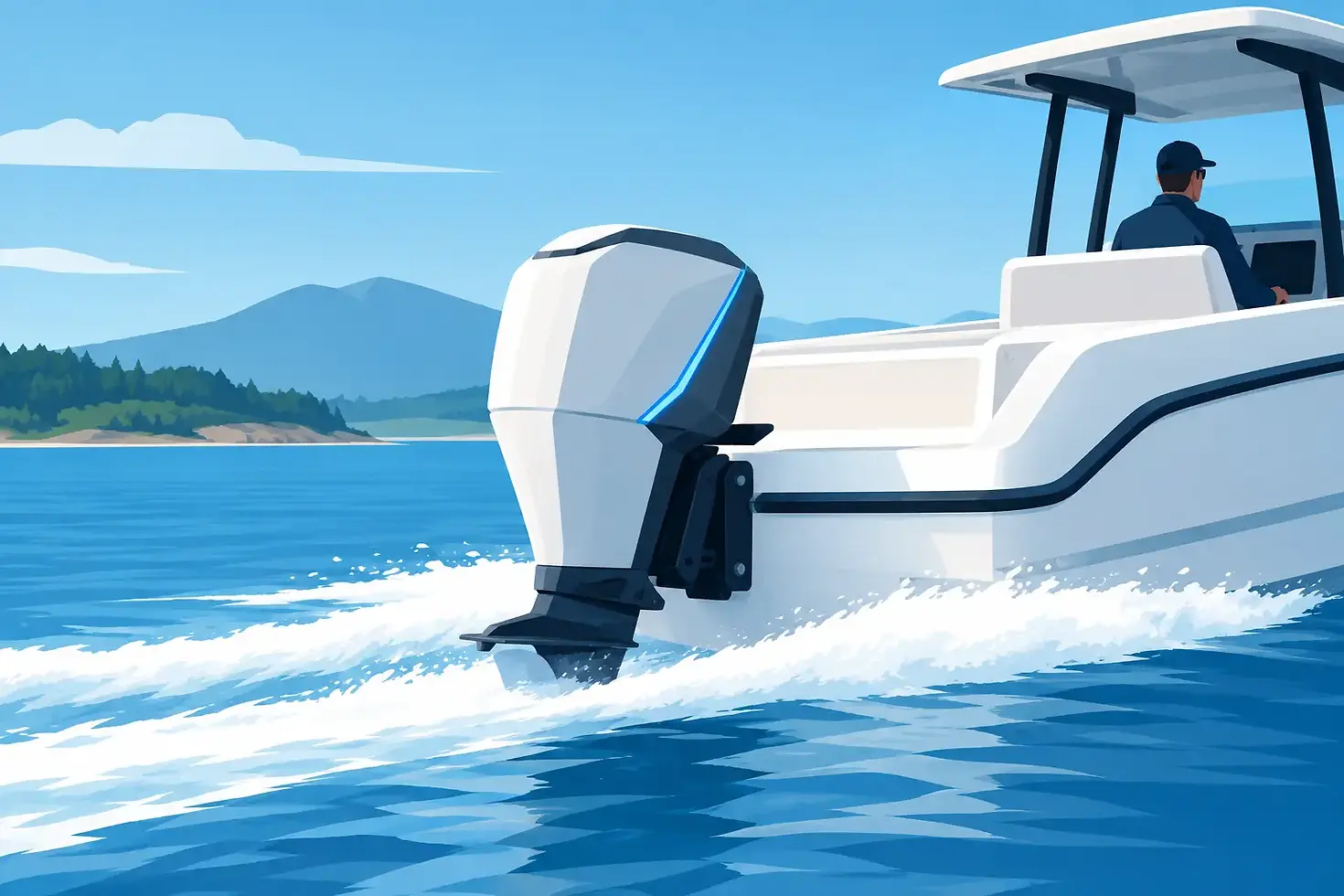
Electric Outboard Motor Power That Gets You on Plane
A serious electric outboard motor is no longer limited to easing a jon boat along a shoreline or pushing a sailboat out of a marina. Boaters who want to accelerate, carry a load, run shallow-water hulls, and get on plane finally have an electric option worth putting beside a conventional outboard. The question is not whether electric propulsion is quiet. It is whether it is properly matched to the boat, the battery system, and the way you actually run.
That is where the difference lives. A capable electric outboard is a propulsion system, not an accessory. Choose the right power class and energy capacity, and you get immediate torque, clean operation, far less routine engine maintenance, and the kind of response that makes a boat feel ready when you hit the throttle.
What Makes an Electric Outboard Motor Serious?
Horsepower still matters. Hulls need enough thrust to overcome resistance, lift onto plane, and stay there with people, gear, fuel-equivalent battery weight, and changing water conditions. An electric motor may produce torque differently than a gasoline engine, but physics does not take the day off. A loaded bay boat, skiff, or fishing rig still needs the right amount of power at the prop.
That is why the move into 40HP, 50HP, 60HP, and 70HP electric outboards matters. These are power classes for boaters who expect more than displacement-speed cruising. They are for the owner who wants to leave the ramp without noise, get the hull working, and run the day without a gas engine dictating the experience.
Instant torque is one of electric propulsion's strongest advantages. There is no waiting for an engine to build revs through a shifting gearcase. Throttle input produces immediate response. For anglers threading through stumps, boaters easing away from docks, or drivers pulling a loaded hull onto plane, that control is not a novelty. It is useful power.
Planing Is the Test That Matters
A boat on plane is not simply moving fast. It is operating in a different mode. The hull rises, wetted surface decreases, and the boat becomes more efficient at speed. Reaching that point requires a strong initial push, especially with a broad-beam hull, a heavy load, choppy water, or a crew sitting aft.
This is why low-thrust electric systems have never answered the needs of many recreational boat owners. They may be excellent for trolling, but trolling power and planing power are different jobs. If your normal run includes crossing a lake, reaching a fishing spot before daylight, or covering a stretch of coastal water before weather changes, select a motor built for primary propulsion.
A high-output electric outboard can make planing possible, but the result depends on the whole rig. A light, efficient hull will plane more easily than a wide, heavy hull with a full livewell and four adults aboard. Propeller selection, motor mounting height, trim, hull condition, and weight distribution all affect the outcome. Electric power is not magic. It is engineering, and good rigging lets it perform.
Do not buy by horsepower alone
Horsepower is the starting point, not the final decision. Compare the motor's intended boat application, continuous output, torque delivery, recommended battery configuration, and propeller options. Then look at your boat honestly.
Think about the heaviest version of your normal day on the water. Add passengers, coolers, rods, tackle, safety equipment, and any fishing gear that stays onboard. If you only size a system for an empty boat on a calm test run, you are setting yourself up for disappointment when the boat is loaded and the wind comes up.
Battery Capacity Determines Your Day
The motor provides power. The battery bank determines how long you can use it. That distinction is central to buying an electric outboard motor with confidence.
A high-power run draws energy quickly. Full-throttle acceleration and sustained planing require far more energy than idling through a no-wake zone. That does not make electric impractical. It means range planning has to be based on your real operating profile, not a single headline number.
If your boating involves short runs with time spent fishing, swimming, drifting, or anchored, electric can be an especially compelling fit. If you routinely run long distances at wide-open throttle, you need enough battery capacity and charging access to support that pattern. There is no universal answer because a two-mile round trip on a protected lake is a different assignment from a long coastal run with current and wind.
A useful way to think about range is in segments. How far is the ramp from your first stop? How much time do you spend running at speed versus maneuvering? What reserve do you want for weather, detours, or a late return? Build the system around those answers, not around the best-case range number.
Battery placement matters, too. Batteries are substantial pieces of the boat's weight plan. Positioning them correctly can improve balance, help hole shot, and keep the hull running as intended. A qualified installer should evaluate cable runs, ventilation requirements where applicable, charging hardware, circuit protection, and access for service before the boat ever touches water.
Quiet Changes More Than the Sound Level
The first time many boaters run electric propulsion, they notice what is missing. No fuel smell at the ramp. No exhaust haze lingering behind the transom. No vibration making conversation harder. No engine noise competing with birds, water, and the people in the boat.
That quieter operation has a performance benefit of its own. You hear hull noise, water changes, gear shifting in a locker, and the approach of another boat more easily. Anglers can work shorelines without the constant background rumble of an engine. Waterfront homeowners and early-morning launchers can leave the dock without announcing it to everyone nearby.
The maintenance picture changes as well. Electric propulsion eliminates oil changes, spark plugs, fuel filters, carburetor issues, and many of the seasonal fuel-system problems gasoline owners know too well. It does not eliminate responsibility. You still need to inspect the propeller, mounting hardware, battery connections, cooling components if fitted, and electrical system. But the routine is generally simpler and cleaner.
Where Electric Requires Straight Answers
Electric boating is not about pretending every use case is identical. Charging takes planning. Battery capacity costs money and takes space. A boat used for marathon, high-speed runs far from shore may need a larger energy system than its owner expects.
Cold weather can affect battery performance. Rough water increases power demand. Heavy boats and inefficient hulls consume more energy. Public charging availability varies widely by region. These are not reasons to write off electric propulsion. They are reasons to size the package correctly and establish a charging routine before the first launch.
Home charging works well for many owners, particularly those who trailer their boats and return home after each outing. Marina-based boaters should consider their shore-power setup, charging window, and available electrical service. The right installation turns charging into a normal part of ownership, much like plugging in a vehicle overnight, rather than a last-minute scramble.
Choose the Power Class for the Boat You Own
Start with the boat manufacturer's maximum rated horsepower, then consider where your current gasoline outboard sits within that range. An owner replacing a small gas motor on a light skiff has a different target than an owner repowering a larger fishing boat that routinely carries a crew and gear.
The 40HP to 70HP range is where electric propulsion begins to answer the question performance-minded boaters have been asking for years: Can it actually move my boat the way I use it? With the correct hull and battery package, the answer can be yes.
Stealth Electric Outboards is built around that premise. Its high-power lineup is aimed at boaters who refuse to treat electric as a trolling-only solution and want propulsion designed to do real work on the water.
Before choosing a motor, bring clear information to the conversation: boat make and model, hull type, dry weight, rated horsepower, typical passenger load, desired running distance, and charging location. Those details lead to a better recommendation than broad claims ever will.
Rigging Is Where Capability Becomes Confidence
The best motor on the wrong setup will never show its full potential. Proper transom mounting, a correctly matched propeller, secure battery installation, appropriate cabling, and calibrated controls all matter. So does dealer support. A knowledgeable dealer can assess the complete boat instead of treating the outboard as an isolated purchase.
Ask how the system will be serviced, who will install it, and what support looks like after delivery. Confirm the charging equipment, battery monitoring, safety shutoff procedures, and recommended operating practices. High-performance electric propulsion deserves professional rigging, especially when a boat will be used at planing speeds.
The right electric outboard motor does not ask you to accept less from your boat. It asks you to be specific about what your boat needs. Start with your hull, load, range, and charging reality, then choose power that gives you room to run with confidence.


Comments