
Buy an Electric Outboard Motor Online With Confidence
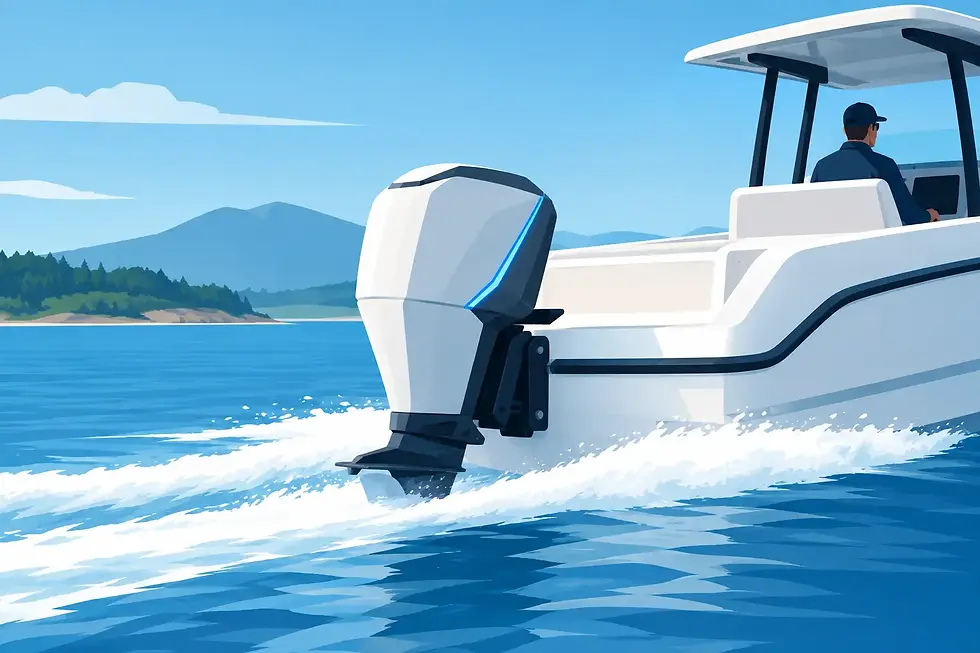
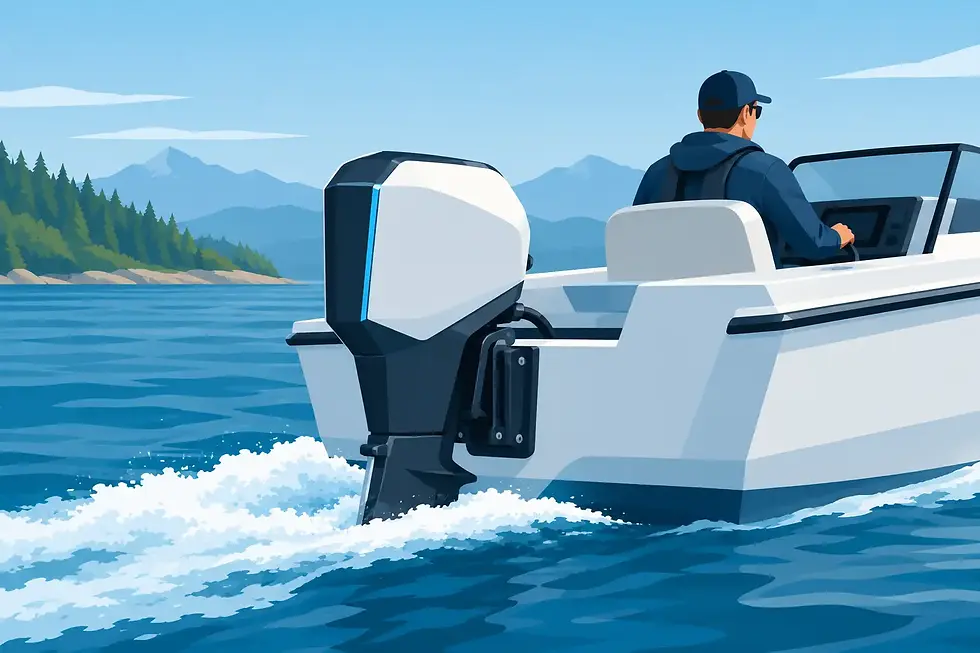
A boat that cannot get on plane is not a performance boat. That is the line serious boat owners should draw when they buy electric outboard motor online. Quiet running and zero gasoline are valuable, but they do not replace acceleration, usable top-end power, or the ability to run the water you actually bought your boat for.
The online market is crowded with electric motors that look impressive in product photos but were built for dinghies, small tenders, or low-speed trolling. If your goal is to move a flats boat, bay boat, skiff, or recreational hull with authority, shopping by appearance, price, or vague thrust claims is a fast way to buy the wrong system. Start with horsepower, then make every other decision support that number.
Start With the Boat, Not the Motor
Before comparing electric outboards, get specific about your boat's real job. Hull type, loaded weight, passenger count, gear, water conditions, and the speed you expect all determine how much propulsion you need. A light skiff with one angler has a very different power requirement than a center-console loaded with a crew, coolers, batteries, and fishing equipment.
Check the boat's capacity plate and its current gasoline outboard rating. The capacity plate is not a suggestion, and an electric outboard installation must remain within the boat manufacturer's rated horsepower and weight limits. Then look beyond the peak figure. Think about the way you run: long cruises across open water, short runs between fishing spots, shallow-water access, or quick acceleration with a full load.
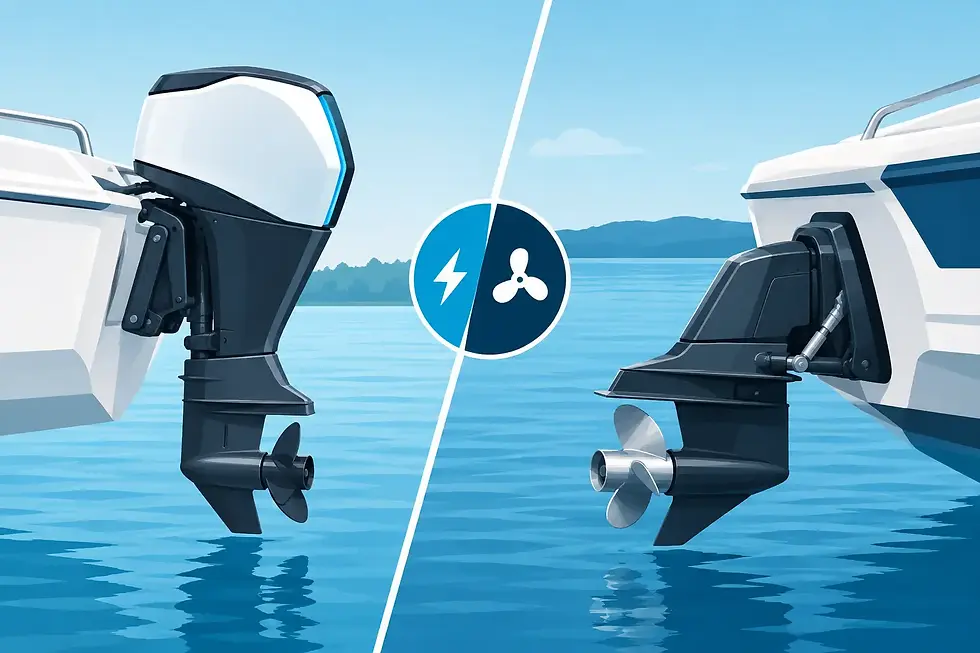
A high-output electric outboard should be evaluated as a serious propulsion system. The question is not whether electric power can spin a propeller. The question is whether the motor, battery system, and propeller package can deliver the torque and sustained output needed to put your hull on plane and keep it there.
Buy Electric Outboard Motor Online by Horsepower
Horsepower is the first filter because it keeps the conversation honest. Electric outboards are often marketed with terms that blur the difference between low-speed assistance and primary propulsion. Do not let pounds of thrust, peak watts, or vague gasoline-equivalent claims replace a clear horsepower discussion.
If your boat needs 40HP, 50HP, 60HP, or 70HP class propulsion, shop in that class. A lower-powered motor may still move the boat, but moving is not the same as performing. It may struggle to plane, lose speed with passengers aboard, or leave you running at full output for too long. That is not an electric boating breakthrough. That is an undersized rig.
Stealth Electric Outboards is built around this distinction, offering electric outboards in 40HP through 70HP classes for boaters who expect real on-water power. That range matters because it gives buyers a path beyond the small auxiliary motor category.
Power selection still depends on the complete setup. A 40HP-class solution may make sense for a lighter hull and moderate loads, while a heavier boat or a boater who regularly runs with passengers may need 60HP or 70HP capability. Be direct with the seller about boat model, hull material, length, current engine, normal load, and target speed. Any company worth buying from should want those details before steering you toward a motor.
Battery Capacity Is Your Fuel Tank
The motor gets most of the attention. The battery bank determines how far and how hard you can run.
Electric boating range is not one fixed number because speed changes everything. Running at displacement speed uses dramatically less energy than holding a boat on plane. Wind, current, water chop, payload, hull cleanliness, propeller setup, and battery temperature all affect consumption. A range claim without a stated speed, boat type, and battery capacity is not enough to plan around.
Ask for the battery capacity in kilowatt-hours, not just voltage. Voltage is part of the system architecture, but kilowatt-hours tell you how much stored energy is available. Then ask what runtime looks like at several realistic operating points: slow cruising, midrange running, and wide-open throttle. The answer should include assumptions, not just an optimistic headline number.
Also consider your charging reality. A large battery system gives you more run time, but it needs a charging plan that fits your home, marina, trailer routine, and typical turnaround time. Some owners can recharge overnight after every outing. Others need a faster charging setup or a boating pattern built around shorter runs. Neither approach is wrong, but guessing after the purchase is expensive.
Battery weight matters, too. Batteries can change stern weight, trim, and storage layout. A properly designed installation considers where battery modules will sit, how cables will be routed, ventilation and protection requirements, and service access. The best motor on the wrong battery layout will not deliver its full potential.
Look Past Peak Power
Peak output creates a great spec-sheet number. Continuous power tells you more about how a system will behave through an actual day on the water.
Ask how long the motor can sustain high output, what thermal protections are built in, and how the system manages heat in real marine conditions. Electric propulsion is efficient, but high performance still creates heat in motors, controllers, cables, and batteries. A system that protects itself by reducing output under load may be doing its job safely, but you need to know when and why that happens.
This is especially relevant for hot climates, heavy hulls, long runs, and boats that see rough water. Buyers looking for planing performance should ask for real boat data whenever possible. What hull was tested? How much battery capacity was installed? How many people were aboard? What was the water condition? A serious answer will have context.
Confirm What Comes With the Purchase
Online pricing can be misleading when one quote covers only the outboard and another reflects a complete propulsion package. Before placing an order, confirm exactly what is included: the motor, controls, display, wiring, charging equipment, battery modules, mounting hardware, propeller, and any required safety components.
You should also understand what is not included. Installation labor, custom rigging, hull modifications, upgraded electrical service, and shipping can materially change the final cost. There is nothing wrong with a modular quote, but every component needs to be visible before you commit.
For a purchase at this level, dealer and installation support are part of the product. Ask who will install the system, who handles commissioning, and who you call if a fault code appears on a Saturday before launch. A capable local marine technician can make ownership easier, particularly when battery placement and control integration need to be tailored to the boat.
Evaluate Controls, Rigging, and Service
An electric outboard should feel natural from the helm. Review the throttle controls, display readability, trim and tilt functions, emergency shutoff, steering compatibility, and available system information. You want clear state-of-charge data, power use, alerts, and operating feedback without turning every outing into a diagnostic exercise.
Rigging is not an afterthought. Cable runs, battery isolation, charging connections, and corrosion protection must be designed for a marine environment. Saltwater boaters should be especially rigorous about sealing, material compatibility, maintenance guidance, and warranty coverage. Freshwater is less punishing, but it does not eliminate the need for a clean, well-protected installation.
Warranty terms deserve the same attention as horsepower. Read what is covered for the motor, controller, battery modules, charging equipment, and labor. Find out where service work is performed and whether replacement parts are stocked domestically. Electric propulsion reduces routine maintenance compared with gasoline, but it does not eliminate the need for capable support.
Avoid the Cheap-Motor Trap
A low price can be legitimate when the motor is designed for a smaller job. It becomes a problem when the advertised use case is bigger than the hardware can realistically handle.
Be skeptical of listings that provide no boat compatibility guidance, no battery requirements, no installed weight, no continuous-power information, and no service path. Product photos cannot prove planing performance. Neither can a single top-speed claim without a test setup.
The better purchase is usually the system sized for your boat, your distance, and your load, even if it costs more upfront. Electric boating pays off through simpler operation, quiet running, and freedom from gasoline handling, but only when the propulsion package is built to do the work.
Before you click buy, make the seller prove the fit. Give them your hull details, tell them how you run, and demand answers that are specific enough to make a confident decision. The right electric outboard should not ask you to lower your expectations. It should give you a stronger reason to leave the gas engine behind.
Comments