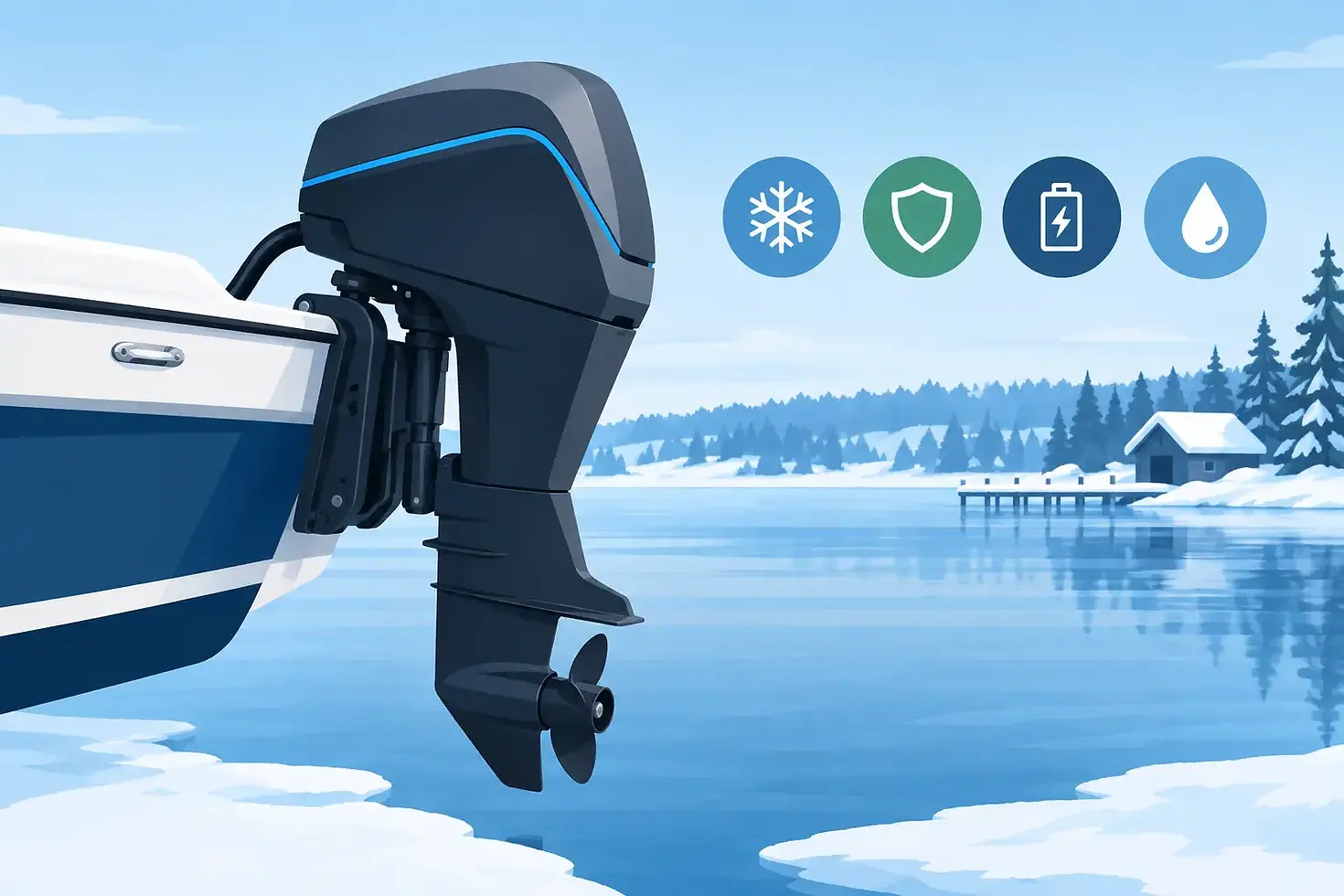
Do Electric Outboards Really Need Winterization?
A gas outboard headed into winter needs fogging oil, fuel stabilization, and a plan to keep ethanol from turning the fuel system into a springtime headache. That is not the playbook for electric propulsion. But do electric outboards need winterization? Yes - just not the kind of winterization most boaters have been taught to expect.
A high-performance electric outboard has fewer fluid systems and no combustion engine to preserve. That removes a major chunk of seasonal work. It does not remove the need for smart storage. Your battery, electrical connections, cooling passages, gearcase components, and boat itself still need attention if freezing temperatures, months of inactivity, or damp storage are ahead.
The advantage is straightforward: winter storage for an electric outboard is about protecting the systems that deliver power, not nursing a gas engine through the offseason.
Do Electric Outboards Need Winterization? Yes, but It Is Different
Electric outboards do not need fuel stabilizer because there is no gasoline. They do not need carburetor draining, cylinder fogging, spark plug service, or oil changes associated with a four-stroke powerhead. That is real time, mess, and maintenance eliminated.
What they do need is a controlled shutdown and storage plan. The exact process depends on the motor, battery architecture, local climate, and whether the boat stays on a trailer, in a dry stack, or at a dock. A Florida boat stored for six weeks is not facing the same risks as a boat laid up in Minnesota from October through April.
For serious electric propulsion, the battery is the center of the winterization conversation. Treat it like the performance component it is. A battery that is stored correctly will be ready to deliver when the season returns. One left fully charged, deeply discharged, wet, or exposed to extreme cold can lose capacity and create an avoidable service issue.
Start With the Battery System
Lithium battery packs are not best stored at either extreme. In most cases, long-term storage calls for a partial state of charge rather than 100% or near-empty. The correct range is specific to the battery and battery management system, so follow the manufacturer’s storage instructions instead of guessing.
That detail matters because a battery continues to manage itself while it sits. Some systems draw a small amount of power for monitoring, communications, or safety functions. If a pack is put away nearly empty, that gradual draw can push it too low before spring. Conversely, leaving it full for months can place unnecessary stress on the cells.
Temperature matters just as much. Avoid storing a battery where it can sit in standing water, receive direct winter sun, or experience uncontrolled temperature swings. A dry, secure space within the temperature range specified by the manufacturer is the goal. If the battery is removable, indoor storage is often the strongest option. If it remains installed, confirm that the boat’s storage location meets the battery maker’s requirements.
Do not charge a cold battery simply because the calendar says it is time to top it off. Many lithium systems restrict charging below certain temperatures, and that protection exists for a reason. Use the charger and charging process approved for your system. High-voltage marine propulsion is not the place for improvised wiring, substitute chargers, or a household extension-cord setup that was never intended for the load.
Before storage, inspect battery cables, connectors, and protective covers. Connections should be clean, dry, fully seated, and free of corrosion or physical damage. If your system has a service disconnect or a manufacturer-approved shutdown sequence, use it. That helps prevent parasitic draw and keeps the system in its intended storage state.
Drain Water Where Water Can Freeze
No gasoline does not mean no water-related risk. Depending on the outboard design, the cooling system may circulate raw water through components that must be cleared before a hard freeze. Follow the manufacturer’s instructions for flushing, draining, or winterizing the cooling circuit.
This is one area where boaters should not assume that every electric outboard behaves the same way. Some systems use different cooling layouts, and some require specific procedures. If water remains trapped in a vulnerable passage and freezes, it can damage a component that otherwise needed no attention at all.
After the final run of the season, rinse away salt, mud, sand, and vegetation. Coastal boaters should be especially thorough around the lower unit, intake areas, mounting hardware, and exposed connectors. Salt left to sit through a wet winter can turn minor surface contamination into corrosion by spring.
Let the motor dry before covering it. A cover can protect an outboard from dust and ultraviolet exposure, but trapping moisture underneath it is a bad trade. Use a breathable cover that fits correctly, and do not wrap the motor in plastic.
Do Not Ignore the Gearcase and Moving Hardware
An electric outboard still operates in a brutal marine environment. The propeller, shaft seals, gearcase, trim system, steering linkages, mounting bracket, and fasteners all deserve an offseason inspection.
Check the propeller for fishing line, dents, chipped blades, or impact marks. Fishing line wrapped behind the propeller can damage seals and allow water into the gearcase. If the gearcase uses lubricant, inspect it according to the service schedule. Milky lubricant can signal water intrusion and should be addressed before freezing weather or long storage makes the problem worse.
Look over anodes, too. They are consumable corrosion protection, not decoration. Replace them when they are significantly depleted, and never paint over them. If the boat is stored in saltwater, corrosion prevention becomes even more important because the outboard remains exposed all winter.
Cycle trim and tilt as recommended, then store the motor in the position specified by the manufacturer. For trailered boats, that may mean keeping the outboard fully down so water can drain rather than collecting in areas that can freeze. Use a transom saver or support device only if it is appropriate for your boat and motor setup.
Prepare the Boat, Not Just the Motor
The outboard may be electric, but the rest of the boat can still punish you for skipping winter prep. Drain livewells, washdown hoses, bilge areas, ballast systems, freshwater tanks, and any plumbing that can freeze. Remove gear that holds moisture. Clean the bilge and verify that drains are open before the cover goes on.
If the boat remains connected to shore power, make sure every component of that setup is marine-rated, protected, and in good condition. If it will not remain connected, shut down nonessential loads. A dead 12-volt house battery can create just as much frustration as an improperly stored propulsion battery.
A quick written record pays off in spring. Note the battery state of charge, date of storage, any warnings on the display, visible damage, and service items you plan to handle before launch. This gives you a baseline instead of relying on memory after a long offseason.
A Simple Winter Storage Routine
The process is shorter than winterizing a gas outboard, but it should still be deliberate. After your final run, wash and dry the motor, clear the cooling system as specified, inspect the propeller and lower unit, set the propulsion battery to its recommended storage condition, and power down the system correctly. Then protect the boat from water intrusion and check on it periodically.
During those checks, look for rodent activity, pooled water, damaged covers, corrosion, and low auxiliary battery voltage. Check the propulsion battery only as often as the manufacturer recommends. Constantly cycling or topping off a lithium pack is not better care.
Stealth Electric Outboards are built for boaters who expect real horsepower and real planing performance, not a quiet compromise. The same performance-first mindset should guide offseason care: protect the equipment that makes that power possible, and skip the outdated gas-engine chores that no longer apply.
When launch day comes, inspect connections, confirm battery status, test controls and trim, and give the cooling system a proper operational check before heading out. A few disciplined steps in the fall mean your first hard acceleration of spring can be the fun part - not the start of a repair list.


Comments